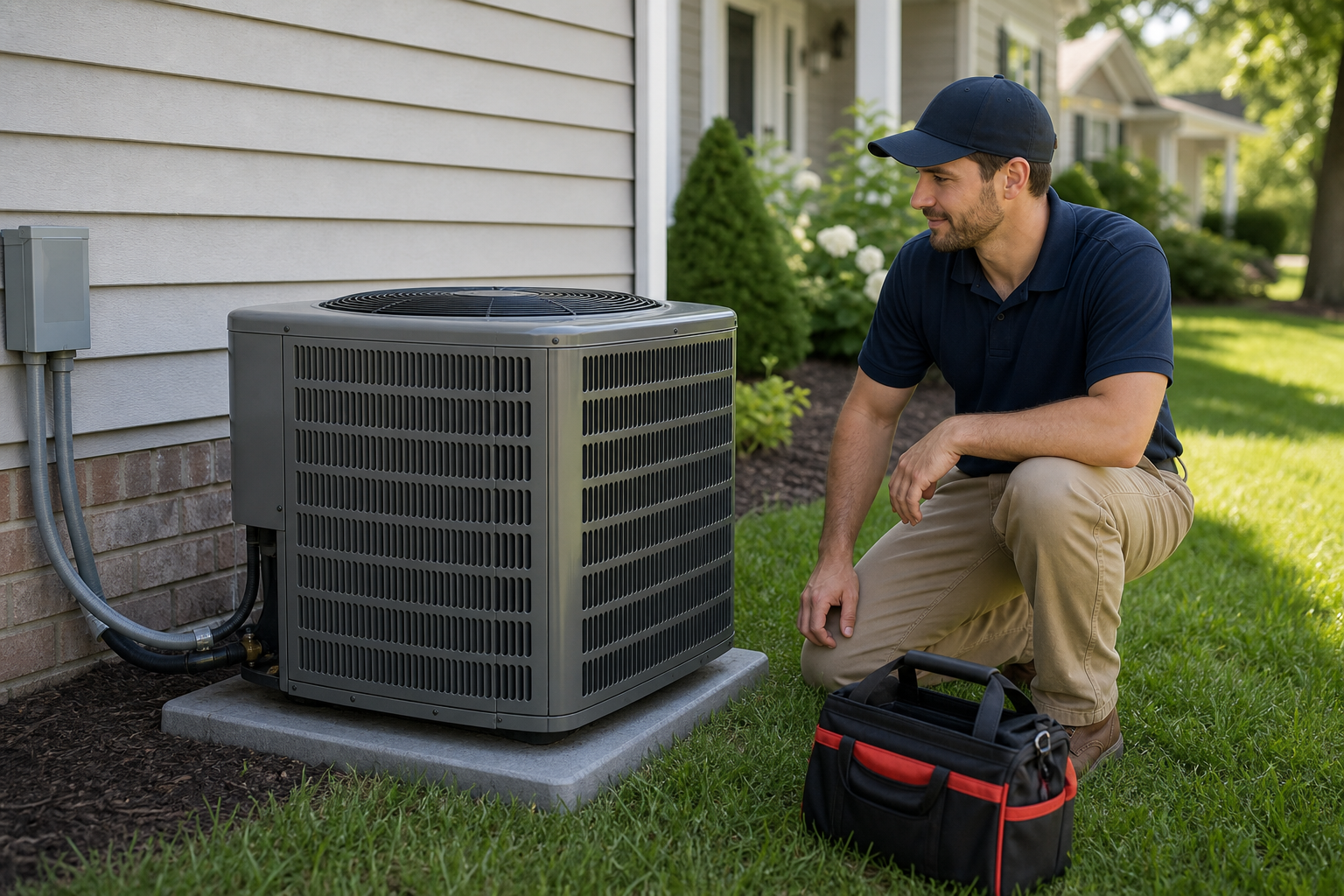
AC Capacitor Replacement: Signs Your Air Conditioner May Need Attention
A practical guide to spotting capacitor-related trouble, understanding what is safe to check at home, and knowing when to call an HVAC professional.
If your air conditioner is humming, struggling to start, or suddenly not cooling the house the way it used to, a capacitor could be part of the problem. Capacitors are small but important electrical components that help motors start and run properly. When one begins to fail, the symptoms can range from mildly annoying to completely system-stopping.
For homeowners, the challenge is that capacitor problems often look like other air conditioner issues. Warm air from the vents might point to a capacitor, but it could also mean a thermostat problem, a contactor issue, a motor problem, or something else entirely. That is why it helps to understand the common signs without jumping to conclusions.
This guide explains what an AC capacitor does, what symptoms often show up first, what you can safely observe from outside the equipment, and when AC capacitor replacement should be left to a qualified HVAC technician. Capacitors can store electrical energy even after power is disconnected, so safety matters here more than curiosity.
If your system is making unusual noises, failing to start, or repeatedly tripping breakers, turn the system off and contact a professional. Electrical components inside an air conditioner can be hazardous even when the unit appears inactive.
What does an AC capacitor do?
An air conditioner capacitor helps deliver the electrical boost needed for certain motors to start and continue operating properly. In many residential systems, capacitors are associated with the outdoor condenser fan motor and compressor. Some systems also use capacitors in the indoor air handler or furnace blower assembly.
Homeowners usually hear about two types: start capacitors and run capacitors. A start capacitor helps a motor get moving when it first turns on. A run capacitor helps stabilize motor operation while the system is running. Some outdoor units use a dual run capacitor, which supports both the compressor and the condenser fan in one component.
When a capacitor weakens or fails, the connected motor may have trouble starting, may overheat, may run inefficiently, or may stop running entirely. That is why a bad capacitor can create symptoms that seem random at first. You might hear the outdoor unit trying to come on, notice longer cooling cycles, or find that the system stops working during the hottest part of the day.
Heat is one reason capacitor issues are so common. Air conditioners work hardest when outdoor temperatures are high, and electrical parts are under more strain during peak cooling season. Age, power fluctuations, and general wear can also contribute.
What warning signs suggest capacitor trouble?
No single symptom proves that a capacitor has failed, but several common signs should get your attention.
Hard starting or delayed starting
If the thermostat calls for cooling and the system seems slow to respond, the capacitor may not be providing the support the motor needs. You may notice a pause between the call for cooling and the outdoor unit actually starting.
Humming from the outdoor unit
A humming sound without normal startup can be a clue. The system may be trying to start, but one of the motors may not be getting enough help from the capacitor. This does not confirm the diagnosis, but it is a common warning sign.
Outdoor fan not spinning normally
If the outdoor unit seems to be on but the fan is not spinning, spinning slowly, or behaving inconsistently, capacitor trouble is one possibility. Turn the system off and call for service rather than continuing to run it. Running the unit with fan or compressor issues can lead to more serious damage.
Warm air or weak cooling
A failing capacitor can keep the compressor or fan from operating the way it should. The result may be warm air from the vents, rising indoor humidity, or rooms that never seem to reach the thermostat setting.
System shuts off unexpectedly
When motors struggle, they may overheat or trigger protective shutdowns. That can look like an AC that starts, runs briefly, and then stops. Intermittent problems are especially frustrating because the system may work again later, making it easy to ignore early signs.
Higher strain during hot weather
Some capacitor problems show up only when the system is under heavier load. If your AC works in the morning but struggles during the hottest hours, a weakening electrical component may be involved.
Visible swelling or leaking on a capacitor
This is something a technician may identify after opening the equipment. A bulging top, warped shape, or oily residue can indicate capacitor failure. Homeowners should not open panels to check for this because stored electrical energy can remain dangerous.
- The AC hesitates before starting.
- You hear humming but cooling never begins normally.
- The outdoor fan is not spinning as expected.
- The home feels warm even though the thermostat is set lower.
- The system cycles off unexpectedly during operation.
- Problems get worse on very hot afternoons.
If you recognize several of these signs at once, it is reasonable to suspect an electrical issue such as a capacitor, but proper testing is still the only way to know for sure.
What can a homeowner safely check?
Homeowners can do a few basic observations before calling for service, but the goal is to stay outside the equipment and avoid electrical risk.
Check the thermostat settings
Make sure the thermostat is set to cool and the target temperature is below the current room temperature. If your thermostat batteries are replaceable, install fresh ones if needed.
Listen and observe
Stand at a safe distance and note what the indoor and outdoor units are doing. Is the indoor blower running? Is the outdoor unit silent, humming, or fully operating? Does the fan spin? These details can help the technician narrow down the issue.
Check the air filter
A badly clogged filter does not cause every cooling problem, but it can make your system perform poorly and add strain. If the filter is dirty, replace it with the correct size and type recommended for your system.
Inspect the breaker panel
If the system is completely unresponsive, check whether a breaker has tripped. If it has, you can reset it once. If it trips again, stop there and call a professional. Repeated breaker trips can point to a serious electrical or motor problem.
Look for ice, debris, or obvious airflow problems
If the outdoor unit is clogged with debris or the indoor coil area appears frozen, those conditions may affect cooling performance. However, they do not rule out capacitor issues, and they should be handled carefully.
What you should not do is open the condenser access panel, touch wiring, attempt to discharge a capacitor, or replace electrical parts yourself unless you are properly trained and equipped. This is not a routine homeowner maintenance item.
A capacitor may look small, but it can hold a dangerous charge. Even with power off at the thermostat or breaker, internal components can still pose a shock hazard. Safe diagnosis requires the right tools and procedures.
What else can look like a bad capacitor?
One reason homeowners should avoid self-diagnosing by symptom alone is that many AC failures overlap. A professional may test the capacitor and find that the real problem is elsewhere.
Contactor issues
The contactor helps route electricity to the outdoor unit when the thermostat calls for cooling. If it fails, the unit may not start or may operate unpredictably.
Compressor problems
A failing compressor can create hard-start symptoms, poor cooling, or breaker trips. In some cases, a capacitor issue and a compressor issue can appear together, especially if one problem has strained the other.
Fan motor failure
If the outdoor fan motor is failing, the symptoms can resemble a bad capacitor. A technician needs to test both the motor and the supporting electrical components.
Thermostat or control board problems
If the system is not receiving or processing the cooling call correctly, the result may look like a startup problem even though the capacitor is fine.
Low refrigerant or airflow restrictions
Poor cooling does not automatically mean electrical trouble. Refrigerant issues, a dirty coil, blocked vents, or duct problems can all reduce comfort.
This is why AC capacitor replacement should be based on testing rather than guesswork. Replacing the wrong part wastes time and may delay the actual repair while the system continues to struggle.
Should you repair, replace, or wait?
Capacitors are generally replaced, not repaired. Once a technician confirms that a capacitor is weak, out of specification, swollen, leaking, or otherwise failed, replacement is the usual solution.
Waiting is rarely a good strategy. A capacitor that is starting to fail may still allow the system to run some of the time, but intermittent operation can put extra strain on motors. That can turn a smaller repair into a much more expensive one.
During a service visit, the technician will typically inspect the relevant components, test the capacitor, and verify whether the fan motor, compressor, or other parts were affected. The correct replacement must match the system requirements. Using the wrong rating can cause immediate problems or shorten component life.
If your system is older, you may also want to ask the technician how this repair fits into the broader condition of the equipment. A single capacitor replacement on an otherwise healthy system is one thing. Repeated electrical repairs on aging equipment may justify a bigger conversation about long-term planning.
Costs, code requirements, permit rules, and replacement recommendations can vary by system type and location, so local requirements vary. A reputable contractor should explain what failed, what they tested, and what options make sense for your home.
- Ask what testing confirmed the capacitor diagnosis.
- Ask whether the fan motor or compressor shows signs of added strain.
- Ask whether any maintenance issues may have contributed to the failure.
- Ask whether the repair is straightforward or part of a larger system concern.
- Ask for clear documentation of the work performed.
How can you reduce the chance of future problems?
You cannot prevent every electrical failure, but a few practical steps can help reduce strain on your air conditioner and improve the odds of catching trouble early.
Schedule routine maintenance
Seasonal professional maintenance gives a technician the chance to inspect electrical components, test operation, and identify wear before a complete breakdown happens. It also helps address airflow and cleanliness issues that can make the system work harder than necessary.
Change filters on schedule
A clean filter supports proper airflow and helps reduce unnecessary stress on the system. Follow the filter change interval that makes sense for your household, pets, and usage.
Keep the outdoor unit clear
Remove leaves, grass clippings, and heavy debris from around the condenser. Good airflow around the outdoor unit supports efficient performance and can reduce heat-related stress.
Pay attention to new noises and delays
Many homeowners wait until the system stops completely. It is better to call when you first notice humming, delayed starts, weak cooling, or unusual cycling. Small warning signs often appear before a total failure.
Do not ignore repeated breaker trips
If the AC repeatedly trips a breaker, stop using it until it is inspected. This is not normal behavior and may signal an electrical fault that needs prompt attention.
Preventive care does not guarantee that a capacitor will never fail, but it can help you avoid the surprise of losing cooling on the hottest day of the year.
Frequently Asked Questions
Can I replace an AC capacitor myself?
For most homeowners, no. Capacitors can retain a dangerous electrical charge, and selecting the correct replacement requires more than matching appearance. Safe HVAC electrical work should be handled by a qualified professional.
Will a bad capacitor always stop the AC completely?
Not always. Some capacitors weaken gradually, which can cause delayed starts, inconsistent cooling, or intermittent shutdowns before complete failure occurs.
Is humming a sure sign the capacitor is bad?
No. Humming can occur with capacitor issues, but it can also point to other electrical or motor problems. Proper testing is the only reliable way to confirm the cause.
How long does AC capacitor replacement take?
The replacement itself may be straightforward for a technician, but the full visit includes diagnosis and safety checks. Timing depends on system access, the exact problem, and whether related components need attention.
Should I keep running the AC if I think the capacitor is failing?
It is better not to keep forcing operation. Continued attempts to run the system can increase strain on motors and other components. If the system is acting abnormally, shut it off and schedule service.
Final Thoughts
AC capacitor replacement is a common repair, but it is not a do-it-yourself shortcut for every cooling problem. The important takeaway for homeowners is to recognize the warning signs early: hard starts, humming, weak cooling, inconsistent fan operation, and shutdowns during hot weather.
If those symptoms appear, focus on safe observations only. Check the thermostat, filter, and breaker, then call a qualified HVAC professional for testing. A capacitor may be the issue, or it may be one piece of a larger problem. Either way, quick attention can help protect the rest of the system and get your home comfortable again.
Find an HVAC Installer Near You
Search the HVAC Installer Network to find local professionals, review installer profiles, and connect with contractors serving your area.
This article is for general homeowner education only and is not a substitute for on-site diagnosis, electrical safety procedures, or professional HVAC service. Equipment designs, repair approaches, code rules, permits, and local requirements vary. Always follow manufacturer guidance and consult a qualified local contractor for recommendations specific to your system.