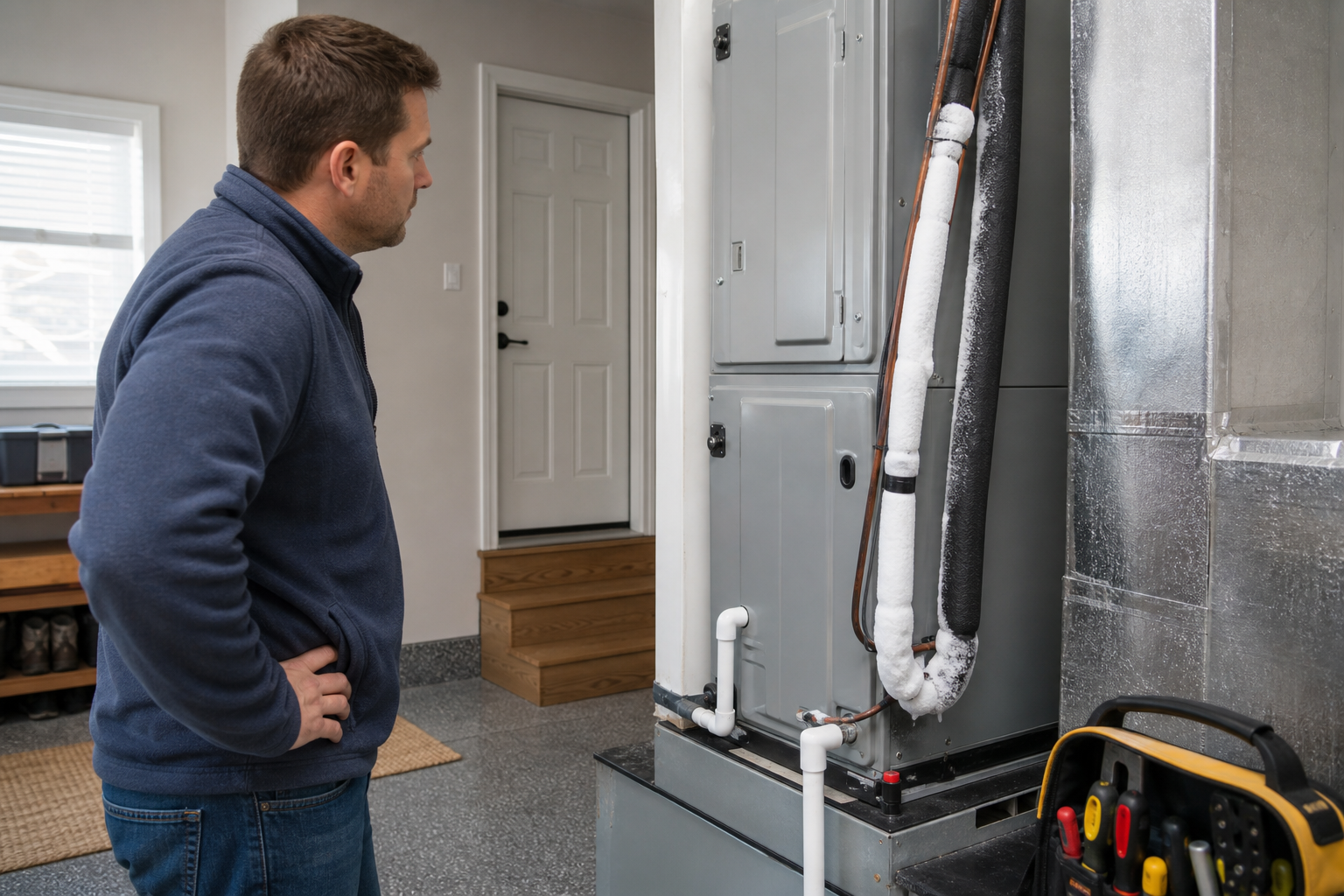
Air Conditioner Freezing Up? What Homeowners Should Check First
A practical guide to why ice forms on your AC, what you can safely do at home, and when it is time to bring in an HVAC professional.
Seeing ice on an air conditioner in the middle of cooling season feels backward, but it is a common problem. If your air conditioner freezing up has you worried, the good news is that the ice itself is usually a symptom, not the root problem. In many homes, the issue starts with restricted airflow, a dirty component, a thermostat setting, or a refrigerant-related problem that needs professional attention.
The most important first step is simple: do not keep forcing the system to run while it is iced over. Running a frozen system can reduce cooling, increase strain on parts, and make diagnosis harder.
This guide walks through what homeowners can check safely, what signs matter most, and how to decide whether the problem is something basic like a clogged filter or something that needs an HVAC technician. Local code, equipment details, and repair requirements vary, so use this article as practical general guidance rather than a substitute for on-site diagnosis.
If you see ice on the indoor coil, refrigerant line, or outdoor unit components, turn cooling off and give the system time to thaw before judging whether it is fixed. Ice can hide the real cause.
Why does an air conditioner freeze up?
Your air conditioner does not create cold air the way a refrigerator does. It removes heat from indoor air by moving refrigerant through the evaporator coil and the rest of the system. For that process to work correctly, the coil needs the right balance of airflow, temperature, and refrigerant conditions.
When that balance is off, the evaporator coil can get too cold. Instead of just cooling humid indoor air, it can begin to accumulate frost or ice. As the ice builds, airflow drops further, and the problem can quickly get worse.
The most common causes usually fall into a few categories.
Restricted airflow
If not enough warm indoor air moves across the evaporator coil, the coil temperature can drop too low. Common reasons include a dirty air filter, blocked return vents, closed supply registers, a dirty evaporator coil, blower problems, or crushed and disconnected ductwork.
Refrigerant issues
Low refrigerant charge or other refrigerant-side problems can change pressure and temperature inside the coil. That can allow the coil to get cold enough to freeze. Homeowners should not try to diagnose or handle refrigerant themselves. That is a job for a licensed HVAC professional.
Dirty components
A dirty coil, matted blower wheel, or heavily clogged filter reduces system performance and can set up the conditions for icing. Dirt acts like a barrier that keeps the system from transferring heat the way it should.
Thermostat and operating habits
Very low thermostat settings do not make a system cool faster. They just keep it running longer. In some situations, especially when the system is already struggling with airflow, long run times can contribute to freezing. Running the AC when outdoor temperatures are unusually cool can also create operating conditions that are not ideal for some systems.
Drainage and moisture issues
While drainage problems are not the most common reason an AC freezes up, excess moisture and related maintenance issues can contribute to poor performance and may show up alongside icing symptoms.
In short, air conditioner freezing up is usually not a standalone problem. It is your system signaling that something else needs attention.
What are the signs your AC is freezing up?
Some homeowners spot ice right away, but many first notice a comfort problem. A frozen AC often still runs, at least for a while, which can make the issue confusing.
Watch for these common signs:
- Weak airflow from supply vents even though the system sounds like it is operating.
- Rooms that feel warmer or more humid than usual.
- Visible frost or ice on the refrigerant line near the indoor unit or outdoor condenser.
- Water around the indoor unit after the ice begins to melt.
- Long cooling cycles with little temperature improvement indoors.
- Unusual hissing, bubbling, or other new noises that may point to a mechanical or refrigerant issue.
- A sudden increase in filter dirt loading because the system has been struggling with airflow.
Sometimes the indoor coil is frozen even if you cannot see it directly. If the large insulated refrigerant line has ice on it, or if airflow is dropping sharply while the system runs continuously, icing is a possibility.
Do not chip at the ice or try to pry open panels that are not meant for routine homeowner access. That can damage the coil fins, insulation, or cabinet parts.
What should you do right away?
If you suspect your AC is frozen, your goal is to stop making the problem worse and start narrowing down the likely cause.
Step 1: Turn off cooling
Set the thermostat from cool to off. If your thermostat allows it, switch the fan to on. That can help circulate room air across the indoor coil and speed thawing without continuing the cooling cycle.
Step 2: Give the system time to thaw
Depending on how much ice has formed, thawing can take several hours. In more severe cases, it may take longer. Put towels near the indoor unit if you expect melting water, and make sure the area around the air handler or furnace stays clear.
Step 3: Check the filter and vents
Once the system is off, inspect the air filter. If it is dirty, replace it with the correct size and type recommended for your system. Then walk the house and make sure major return grilles are not blocked by furniture, rugs, or stored items. Supply registers should generally be open as well.
Step 4: Look for obvious airflow issues
If you know where your indoor unit is located, listen for the blower when fan mode is on. If airflow still seems very weak after thawing, there may be a blower, coil, or duct issue that needs service.
Step 5: Restart carefully
After the system fully thaws and you have corrected any obvious airflow problem like a clogged filter, you can try running the AC again. If it cools normally and no ice returns, the issue may have been temporary. If it freezes again, stop and call a professional.
A repeated freeze-up is a sign that the root problem has not been solved.
What can homeowners safely check?
There are several useful checks a homeowner can make without opening sealed components or working around electrical parts beyond normal routine access.
Air filter condition
This is the easiest and most overlooked item. A filter packed with dust restricts airflow and can absolutely contribute to ice formation. Replace a dirty filter with the same size and a reasonable filter type for your system. If you are unsure what filter works best, ask your installer during your next maintenance visit.
Supply and return airflow
Make sure return grilles are uncovered. Check that supply registers are not closed throughout large sections of the home. Homeowners sometimes close vents in unused rooms, but too many closed vents can affect airflow and pressure balance.
Indoor vents and room circulation
Look for anything blocking air movement, including curtains pressed against returns, furniture over registers, or doors to rooms that have limited return pathways.
Outdoor unit condition
The outdoor condenser should have space around it for airflow. Remove leaves, grass clippings, and obvious debris from around the unit. Do not dismantle the unit or spray water into electrical sections. Routine cleaning should stay gentle and limited unless a technician advises otherwise.
Thermostat settings
Set the thermostat to a practical temperature. Extremely low settings can keep the system running longer than necessary. If the fan has an auto and on option, remember that fan on can help thaw a frozen coil, while normal cooling operation is usually left on auto unless your contractor recommends otherwise.
Drain area observation
Notice whether water is pooling around the indoor unit as the ice melts. While that does not confirm the original cause, it tells you to monitor the area and mention it during service.
What should you not do? Do not open sealed refrigerant components, do not add refrigerant, do not bypass safety devices, and do not keep resetting the system repeatedly in hopes it will push through the issue.
When is professional HVAC service necessary?
Some freeze-ups are caused by simple airflow problems, but many require trained diagnosis. If replacing the filter and restoring airflow does not solve it, professional service is the next step.
Call an HVAC professional if:
- The system freezes again after thawing.
- The filter was clean, but airflow still seems weak.
- You hear unusual noises from the blower, indoor unit, or outdoor unit.
- You suspect refrigerant problems because cooling performance has dropped steadily or icing keeps returning.
- The indoor coil appears dirty or inaccessible.
- Water leakage, drain issues, or repeated shutdowns are occurring.
- The system is older and has not had routine maintenance in a while.
A technician can verify airflow, inspect the evaporator coil, test blower performance, check temperature conditions, and evaluate refrigerant operation. That matters because several different problems can produce the same visible symptom: ice.
For example, a refrigerant issue can look similar to an airflow issue from the homeowner side. The wrong fix wastes time and can lead to more problems later. A proper diagnosis helps avoid replacing parts that are not actually at fault.
If your system is freezing during extreme weather or after other recent HVAC work, let the contractor know exactly what happened, including whether you saw frost on the line set, where water appeared, and whether changing the filter made any difference.
How can you help prevent future freeze-ups?
Not every freeze-up is preventable, especially if a component fails unexpectedly, but homeowners can reduce the risk with a few good habits.
- Check the air filter regularly and replace it when dirty.
- Keep supply vents and return grilles open and unobstructed.
- Schedule routine professional maintenance before heavy cooling season.
- Keep the outdoor unit reasonably clear of vegetation and debris.
- Pay attention to early warning signs like weak airflow or longer run times.
- Avoid setting the thermostat drastically lower than needed for comfort.
- Ask your contractor to inspect duct condition if some rooms always seem to have poor airflow.
Maintenance is especially helpful because freeze-ups often build from conditions that worsen gradually. A coil does not always ice overnight just because one thing changed that day. Sometimes the system has been losing airflow or performance over time, and the freezing event is simply when the issue becomes obvious.
It is also worth remembering that every home and HVAC system is a little different. Duct layout, filter type, equipment age, insulation levels, and local climate all affect performance. Local requirements vary, and a nearby professional can give recommendations that fit your specific setup.
If your AC froze once and then seemed fine after a filter change, keep watching it over the next several days. If cooling weakens again or ice returns, schedule service before the problem leads to a no-cool breakdown.
Frequently Asked Questions
Can I run my AC if it has a little ice on it?
It is better to turn cooling off and let the system thaw. Even a small amount of visible ice can indicate conditions that will get worse if the unit keeps running.
Will a dirty filter really make an air conditioner freeze up?
Yes, it can. A heavily clogged filter restricts airflow across the evaporator coil, which can allow the coil to get cold enough for frost and ice to form.
How long does it take for a frozen AC to thaw?
It depends on how much ice has built up. Some systems thaw in a few hours, while others can take longer. Running the thermostat fan in the on position can help move air across the coil during thawing.
Does ice on the outdoor unit always mean low refrigerant?
No. Refrigerant issues are one possibility, but airflow problems can also lead to icing symptoms. A technician needs to inspect the system to confirm the actual cause.
Should I pour hot water on the ice to melt it faster?
No. Rapid temperature changes and direct water application in the wrong areas can create other problems. Let the system thaw naturally with cooling off and fan on if available.
Is a frozen AC an emergency?
It can become urgent if the home is overheating, water is leaking indoors, or the system repeatedly shuts down. Even when it is not an immediate emergency, it should be addressed promptly to avoid added wear and possible damage.
Final Thoughts
An air conditioner freezing up is a warning sign that your system is not moving heat the way it should. Sometimes the fix is as simple as restoring airflow with a clean filter and open vents. Other times, the cause is hidden deeper in the system and needs professional diagnosis.
If you remember one thing, make it this: do not keep running an iced-over AC and hope it clears itself. Turn the system off, let it thaw, check the basics, and call a qualified HVAC professional if the problem returns or the cause is not obvious. Acting early usually makes the next step simpler and helps protect your comfort during hot weather.
Find an HVAC Installer Near You
Search the HVAC Installer Network to find local professionals, review installer profiles, and connect with contractors serving your area.
This article is for general informational purposes only and is not a substitute for on-site HVAC diagnosis, service, or installation advice. Equipment design, home conditions, and local requirements vary. If your system is freezing up repeatedly or showing signs of mechanical or refrigerant problems, contact a qualified local HVAC professional.