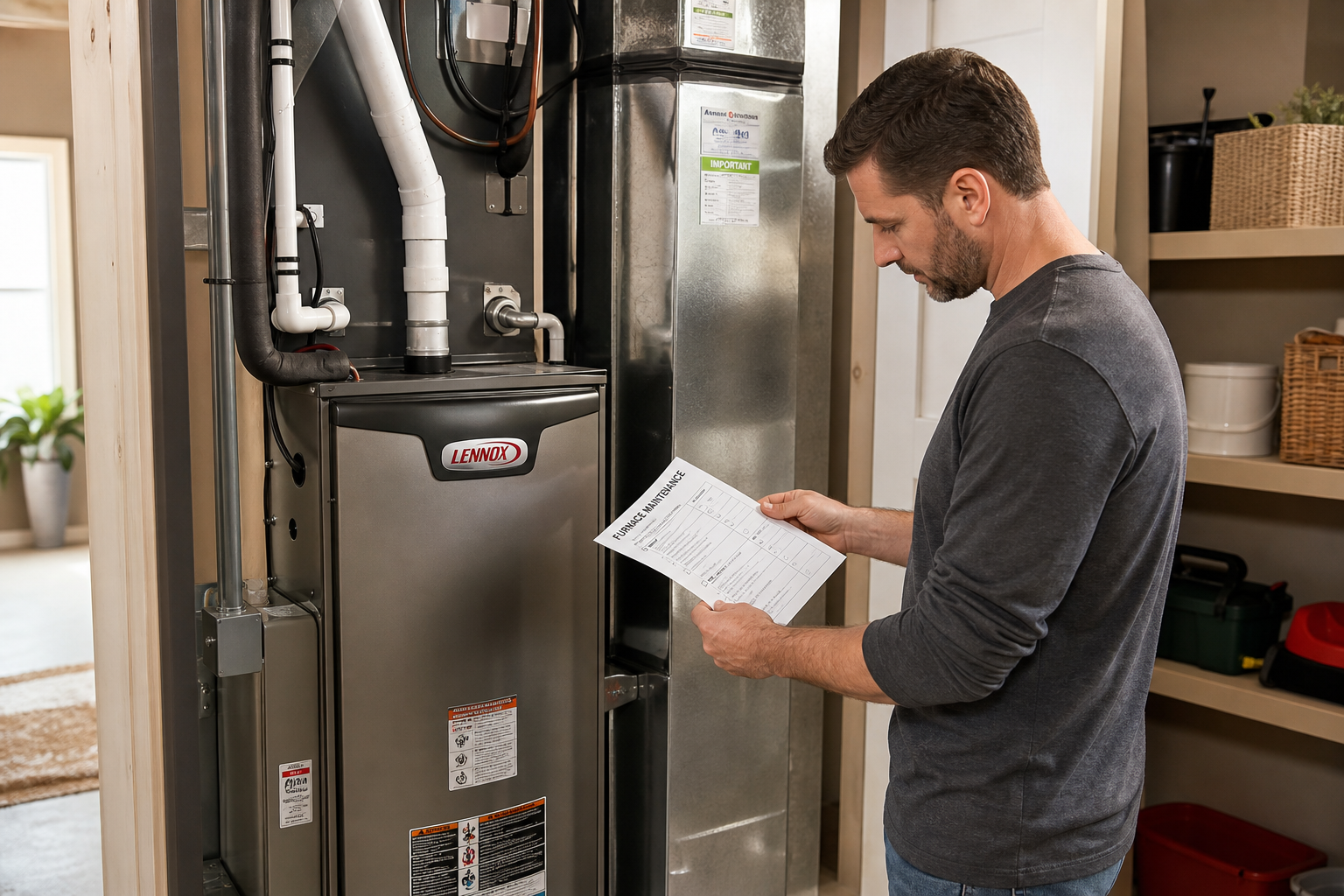
When to Replace Your Furnace: Practical Signs Homeowners Shouldn’t Ignore
A clear, homeowner-friendly guide to spotting furnace trouble, weighing repair versus replacement, and planning your next steps with confidence.
If your furnace has started making strange noises, struggling to keep rooms warm, or needing repair after repair, you may be asking the right question: when to replace furnace equipment instead of putting more money into it.
For many homeowners, this decision is not just about age. It is about reliability on cold nights, rising utility bills, uneven comfort, and whether another repair is actually a smart use of money. A furnace can sometimes keep going for years with proper service, but there comes a point when replacement becomes the more practical choice.
This guide walks through the most common signs that a furnace may be nearing the end of its service life, what issues deserve immediate attention, and how to compare the cost of another repair with the benefits of a new system. Because equipment, fuel type, home layout, and local code requirements vary, the best next step is always a qualified local evaluation before making a final decision.
If your furnace is producing unusual smells, causing repeated breaker trips, shutting down unexpectedly, or showing signs of venting or combustion problems, schedule professional service right away. Comfort issues can wait a little while, but potential safety concerns should not.
How long does a furnace usually last?
There is no single replacement date that applies to every furnace. Some systems age gracefully with regular maintenance, while others decline earlier because of heavy use, poor installation, dirty ductwork, airflow problems, or a lack of service over time.
In general, homeowners often start thinking more seriously about replacement once a furnace reaches later life stages and repairs become more frequent. Age alone does not automatically mean failure, but it does matter because older components wear down, metal can fatigue, heat exchangers and motors experience long-term stress, and parts may become harder to source.
A furnace that is older but still heating evenly, operating safely, and requiring only routine maintenance may not need immediate replacement. On the other hand, a unit that is not especially old but has persistent reliability issues could be a better replacement candidate sooner than expected.
The better question is not simply, “How old is it?” but, “How is it performing now?” If your furnace is older and showing multiple symptoms at once, that combination is often more meaningful than age by itself.
- Check the age of the furnace from the model information or service records.
- Review how often you have needed repairs over the last few heating seasons.
- Note whether parts are becoming difficult or expensive to replace.
- Pay attention to whether the system still heats the home evenly and reliably.
- Consider whether your installer has already mentioned long-term wear concerns.
If you do not know the age of your furnace, a local HVAC professional can usually identify it from the serial number and inspection of the equipment. That context helps you understand whether recent problems are routine or signs of a system reaching the end of its practical life.
What warning signs suggest replacement may be the better option?
Most furnaces do not fail all at once without any warning. Instead, they often show a pattern of decline. One repairable issue may not mean much by itself, but several symptoms together can point toward replacement.
Frequent breakdowns are one of the clearest signs. If your furnace needs service every heating season, or multiple times in the same season, you are not just paying for repairs. You are also dealing with inconvenience, stress, and the risk of losing heat when you need it most.
Uneven heating is another common clue. If one room feels comfortable while another stays cold, the cause may be airflow, ductwork, insulation, thermostat placement, or the furnace itself. A contractor should diagnose the full system before recommending replacement, but persistent uneven comfort should not be ignored.
Short cycling can also be a warning sign. This is when the furnace turns on and off too often instead of running through steady heating cycles. It can increase wear on components and may indicate sizing problems, thermostat issues, airflow restrictions, or internal equipment trouble.
Unusual noises deserve attention as well. Banging, rattling, screeching, humming, or popping sounds may come from loose parts, blower problems, ignition issues, expanding ductwork, or other mechanical wear. Some noise issues are minor, but recurring or worsening sounds often mean the system needs professional diagnosis.
Homeowners should also watch for signs that the furnace is no longer operating cleanly or consistently. Burning odors at startup may be normal briefly after long periods of disuse, but persistent odors are different. Any concern involving venting, combustion, or possible gas smell should be treated as urgent and evaluated immediately.
Visible rust, corrosion, water around the unit, soot, or signs of poor venting can all suggest a bigger issue than a simple tune-up. A qualified technician can determine whether the problem is isolated and repairable or whether replacement is the wiser long-term option.
| Warning Sign | Why It Matters |
| Frequent repairs | Suggests growing wear and rising ownership costs |
| Uneven heating | May indicate furnace decline or broader airflow problems |
| Short cycling | Can reduce comfort and increase strain on components |
| Strange noises | Often point to mechanical wear or loose internal parts |
| Rising energy use | May reflect reduced efficiency or longer run times |
| Visible corrosion or venting concerns | Can indicate more serious condition or safety issues |
When homeowners ask when to replace furnace equipment, the answer often becomes clearer when these issues start stacking up. One symptom may mean repair. Several at once often signal that replacement deserves serious consideration.
When is a furnace repair still worth doing?
Replacement is not automatically the right answer every time something goes wrong. Many furnace issues can be repaired cost-effectively, especially when the system is still in a reasonable age range, has a good service history, and the problem is limited to one component.
For example, a thermostat issue, ignitor problem, flame sensor cleaning, blower service, or other straightforward repair may restore normal operation without making replacement necessary. In these cases, spending money on a well-targeted repair can be perfectly sensible.
The key is to look at the big picture. If the furnace has otherwise been reliable, keeps the home comfortable, and does not show signs of serious overall wear, a repair may buy you several more heating seasons. That can be especially helpful if you need time to budget for a planned replacement later.
Repair becomes harder to justify when the system has a history of repeat problems, major component failure, declining efficiency, or uncertainty about long-term reliability. If you are fixing one issue while another one is likely around the corner, you may simply be delaying the inevitable at increasing cost.
A trustworthy installer should be able to explain both paths clearly. They should tell you what failed, what the repair will and will not solve, and whether they believe the unit is still a reasonable candidate for continued service. You should not have to guess whether a repair recommendation is a short-term patch or a durable solution.
- Ask whether the current problem is isolated or part of broader wear.
- Ask how likely additional repairs are in the near future.
- Request a comparison between repair cost and replacement value.
- Find out whether replacement parts are readily available.
- Ask whether airflow or duct issues are contributing to equipment strain.
In many homes, the best path is not emergency replacement or endless repair. It is a staged decision: complete the repair if it makes sense now, then begin planning for replacement before the next major breakdown.
How do comfort and energy bills factor into the decision?
Homeowners often focus on whether the furnace still turns on, but that is only part of the story. A furnace can technically run while still doing a poor job of heating the home efficiently or comfortably.
If you have noticed rooms that are slower to warm up, longer run times, colder mornings, more thermostat adjustments, or stuffy air in some areas and chilly air in others, your heating system may no longer be delivering the performance your home needs. Sometimes that points to the furnace itself. Other times it points to duct leakage, dirty filters, poor return airflow, insulation gaps, or an oversized or undersized system.
Energy use is another practical clue. If your heating bills have risen and your household habits have not changed much, it may be a sign that the system is working harder to produce the same result. That does not prove replacement is necessary, but it is worth investigating.
Comfort and efficiency should be considered together. A new furnace may improve reliability and reduce wasted operation, but results also depend on proper sizing, airflow, duct condition, thermostat setup, and installation quality. Replacing equipment without addressing the rest of the system can leave comfort problems partially unresolved.
This is why a good replacement conversation should include more than brand names or furnace efficiency labels. It should cover how the equipment matches the home, whether the duct system is supporting proper airflow, and whether any additional improvements should be considered at the same time.
For homeowners, the practical takeaway is simple: if your furnace still runs but your comfort is declining and your costs feel harder to justify, replacement may offer value beyond just avoiding the next repair. It may restore more consistent, predictable heating throughout the home.
A furnace replacement decision should not be based on utility bills alone. Changes in weather, insulation, air leakage, thermostat settings, and duct performance can all affect heating costs, so a whole-system evaluation is the most useful approach.
What happens during a furnace replacement evaluation?
If you are leaning toward replacement, a professional evaluation should help you understand not just what to buy, but why a particular option makes sense for your home.
The installer will typically inspect the existing furnace, note the age and condition of the equipment, review the type of fuel used, and ask about your comfort concerns. They may also inspect accessible ductwork, filter setup, return and supply airflow, thermostat operation, venting, and the physical space where the furnace is located.
A strong evaluation should include discussion of sizing, not just a one-for-one swap based on the old unit. In some homes, the existing furnace may have been oversized or undersized from the beginning. Replacing it with the same capacity without reviewing the home’s actual needs can lead to continuing comfort issues.
You should also expect a conversation about installation details. That can include drain considerations for certain equipment, venting changes, electrical work, filter cabinet options, duct transitions, condensate management where applicable, and whether any code-related updates may be required. Local requirements vary, so the exact scope can differ by area and by home.
Ask the contractor to explain what parts of the system are staying, what parts are changing, and whether anything outside the furnace itself could affect performance. A clear estimate and explanation help you compare proposals more effectively.
During the visit, it is smart to ask practical questions that affect day-to-day ownership, such as service access, filter size, noise expectations, thermostat compatibility, and whether your current duct system supports the proposed equipment.
- Will the proposed furnace be sized based on the home rather than just the old unit?
- Are there any known ductwork or airflow concerns that should be addressed?
- Will venting, drainage, or electrical connections need updates?
- Does the estimate explain labor, materials, and scope clearly?
- Are local permit or inspection steps expected in your area?
A careful evaluation can also help reveal whether replacement is the full answer or whether related system issues should be corrected at the same time. That kind of honesty is often the difference between a replacement that truly improves comfort and one that simply swaps equipment.
How can homeowners prepare for replacement?
Once you decide that replacement is the right move, a little preparation can make the process smoother and less stressful.
Start by collecting any recent service records and notes about the problems you have experienced. If certain rooms stay cold, if the furnace is especially noisy at certain times, or if airflow feels weak at particular vents, write that down. Those details can help the installer address the actual problem rather than just the equipment.
Clear the area around the furnace so technicians have safe working access. If the unit is in a closet, basement, garage, or utility room, remove stored items nearby. That helps the crew work efficiently and may reduce the chance of delays.
You should also ask ahead of time about timing and logistics. Will the heat be off for several hours? Will someone need to be home the whole time? Are there pets that should be secured? Is there attic or crawlspace access if the project involves duct connections? These are simple questions, but they make replacement day easier.
Homeowners should also think beyond the installation itself. Ask what routine maintenance will be recommended, how often filters should be checked, and what signs should prompt a service call in the future. A new furnace is a major home system, and good habits from the beginning can help protect performance over time.
If your budget allows, this is also a good time to consider related improvements that may support comfort, such as upgraded filtration, thermostat improvements, or duct sealing if your contractor identifies meaningful airflow issues. Not every home needs extra work, but this is often the most convenient time to look at the whole heating system together.
Most importantly, avoid waiting until a complete winter breakdown if you already know the furnace is in decline. Planned replacement usually gives you more time to compare options, ask questions, and schedule work before the coldest weather creates urgency.
Frequently Asked Questions
Is it better to replace a furnace before it stops working completely?
In many cases, yes. If the furnace is aging, unreliable, and showing multiple warning signs, planned replacement is often easier than dealing with an emergency outage during cold weather. It gives you more time to compare options and schedule the work.
Can a furnace look fine but still need replacement?
Yes. Some furnaces appear normal from the outside but have internal wear, declining performance, or persistent operating issues. That is why comfort problems, repair history, and professional inspection matter as much as appearance.
Should I replace my furnace and air conditioner at the same time?
Sometimes it makes sense, especially if both systems are older or if shared components affect performance. In other homes, replacing only the furnace is reasonable. A contractor can explain whether your specific setup would benefit from combined replacement.
What if my furnace problem is really a ductwork issue?
That is possible. Uneven temperatures, weak airflow, and some comfort complaints can come from duct leakage, restricted returns, poor design, or insulation issues rather than the furnace alone. A full system evaluation is important before deciding.
Are permits or inspections required for furnace replacement?
Local requirements vary. Your installer can explain what is typically required in your area and whether any permit, inspection, or code-related updates are part of the project.
Final Thoughts
If you have been wondering when to replace furnace equipment in your home, look at the full picture: age, repair frequency, comfort, energy use, noise, reliability, and professional feedback. The decision is rarely about one symptom alone.
A repair may still be the right move for a furnace with plenty of useful life left. But if breakdowns are becoming routine, comfort is slipping, and confidence in the system is fading, replacement can be the more practical and less stressful path.
The most helpful next step is a local HVAC evaluation that looks at the furnace and the rest of the heating system together. That way, you can make a decision based on real conditions in your home rather than guesswork.
Find an HVAC Installer Near You
Search the HVAC Installer Network to find local professionals, review installer profiles, and connect with contractors serving your area.
This article is for general homeowner education only and is not a substitute for on-site diagnosis, installation guidance, or safety advice from a licensed HVAC professional. Equipment condition, venting, fuel type, code requirements, and permit or inspection rules vary by location. Always follow manufacturer instructions and consult a qualified local contractor for recommendations specific to your home.