Should You Insulate Your Attic Before Replacing Your HVAC System?
A practical guide to load reduction, comfort, and making sure your next system is sized for the home you actually have.
If your air conditioner or furnace is nearing the end of its life, it is natural to focus on the equipment first. But before you sign a replacement contract, there is another part of the house that may deserve just as much attention: the attic.
Attic insulation plays a direct role in how much heat enters your home in summer and how much escapes in winter. If the attic is under-insulated, unevenly insulated, or paired with major air leaks, your HVAC system may be working harder than it should. That matters because the amount of heating and cooling your home needs helps determine what size system should be installed.
In many homes, improving the attic before replacing HVAC can reduce the load enough to influence equipment selection, improve comfort, and lower the chance of ending up with a system that is larger than necessary. In other situations, the HVAC replacement cannot wait, or attic work is only part of the solution. The key is knowing how to evaluate the order of work.
This guide walks through when it makes sense to insulate your attic before replacing HVAC equipment, what problems insulation can and cannot solve, and how to coordinate both projects with local professionals. Since homes, climates, and local requirements vary, your best path should be based on an in-person assessment rather than a one-size-fits-all rule.
If you plan to improve attic insulation soon, tell your HVAC estimator before they size replacement equipment. A load calculation based on the current attic may not be the right basis for the system you want to live with long term.
Why does attic insulation matter before HVAC replacement?
Your HVAC system is designed to offset heat gain and heat loss. The attic is one of the biggest places where that heat movement happens. In summer, a hot attic can drive heat into the living space below. In winter, inadequate insulation can allow indoor warmth to escape upward. The worse that thermal boundary is, the more work your equipment has to do.
That extra load affects more than utility bills. It can also influence comfort from room to room, how long your system runs, how often it cycles, and whether upstairs spaces feel consistently warmer or colder than the rest of the house. Many homeowners assume those issues always point to failing HVAC equipment, when the building shell is often part of the story.
If you replace the equipment without addressing a weak attic, you may simply be installing a new machine to compensate for avoidable heat gain or heat loss. That does not mean attic insulation should always come first, but it does mean the attic should be part of the replacement conversation.
A practical way to think about it is this: HVAC equipment treats the symptom, while attic insulation may reduce the cause. When both are handled together in the right order, homeowners often get a better overall result.
How can attic insulation affect HVAC sizing?
Proper equipment sizing depends on a load calculation, not a guess based on the old system or the home’s square footage alone. That calculation considers how the house gains and loses heat. Insulation levels, air leakage, window performance, orientation, duct conditions, and local design temperatures all matter.
If you improve attic insulation before the load calculation is finalized, the home’s heating and cooling demand may decrease. That can matter because larger is not automatically better in HVAC. An oversized air conditioner may cool quickly but shut off too soon, which can reduce dehumidification and leave the house feeling clammy. An oversized furnace can cycle on and off more often, creating temperature swings and unnecessary wear.
Right-sizing becomes especially important if your current system was selected years ago under different assumptions, or if it was oversized from the start. Many homes have equipment that was never carefully matched to the actual load. If attic improvements are planned, repeating the old sizing approach can carry old mistakes into the new installation.
This is one reason many good installers ask detailed questions about future home improvements. If you tell them you are adding insulation after the replacement, they may need to account for that in their recommendation. The goal is not to buy the biggest unit you can afford. The goal is to buy equipment that matches the home after planned envelope improvements are complete.
What are the signs your attic may be part of the problem?
Homeowners often start exploring replacement because comfort is poor, energy bills feel high, or the existing system struggles during extreme weather. Those symptoms can involve equipment age, but they may also point to attic-related issues.
Common clues include hot upstairs rooms in summer, rooms below the attic that are harder to keep comfortable, wide temperature swings between day and night, and a system that seems to run constantly during peak weather. In winter, you may notice chilly ceilings, drafty feeling rooms, or certain spaces that lose heat quickly even when the furnace is operating normally.
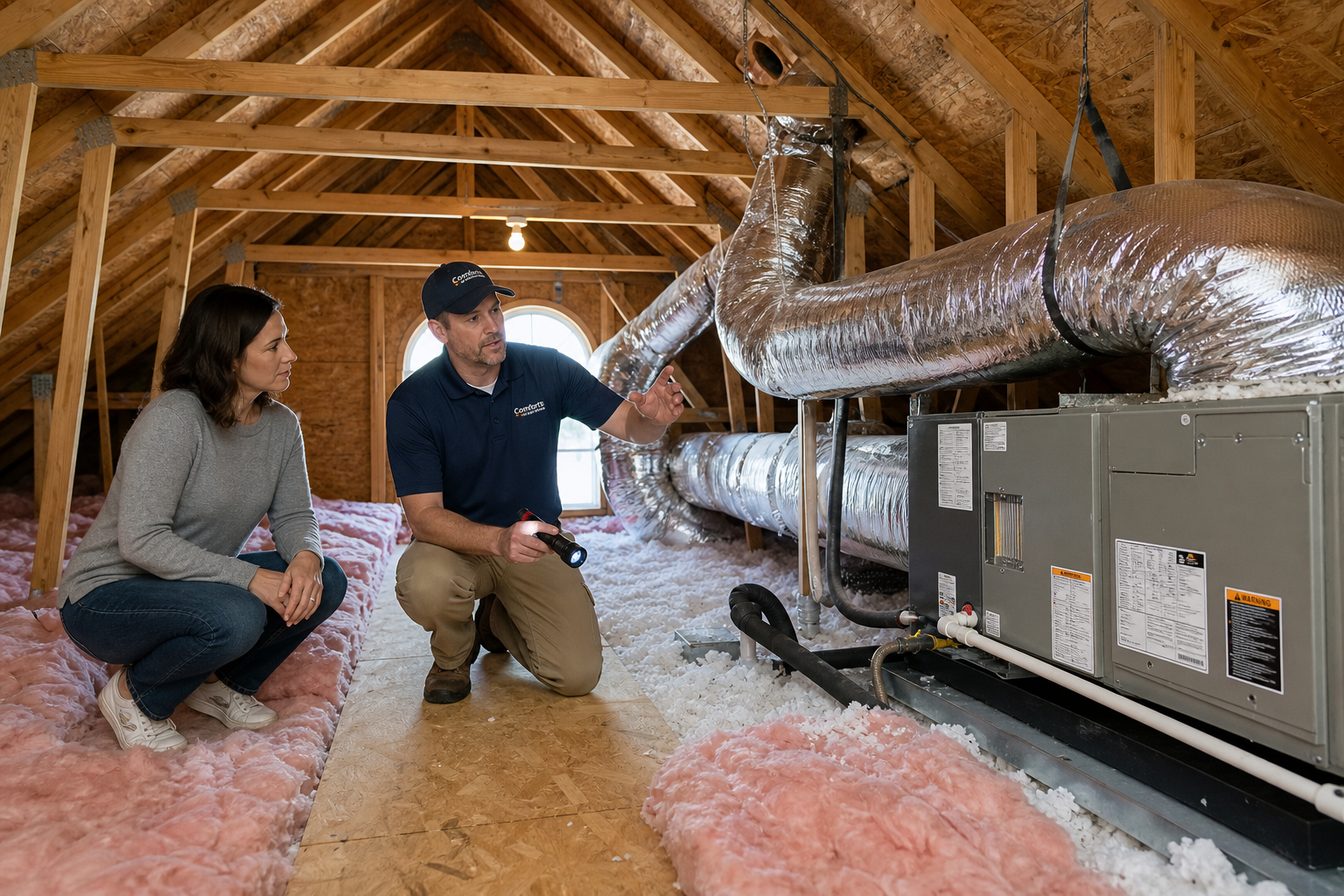
A visual attic inspection may reveal thin insulation, exposed ceiling joists, bare spots around recessed lights or access hatches, disturbed insulation from service work, or ductwork sitting in very harsh attic conditions. Some homes also have air leakage around top plates, wiring penetrations, bath fan housings, or attic hatches. In those cases, adding insulation alone may not be enough unless air sealing is considered too.
Another clue is when the old system has been repaired repeatedly but comfort never really improves. If the machine runs but the house still feels difficult to condition, the issue may not be capacity alone. It may be the amount of heat the house is gaining or losing through the attic.
- Upstairs rooms are consistently hotter in summer or colder in winter.
- The system runs for long periods during very hot or cold days.
- Some ceilings or rooms feel uncomfortable even when the thermostat is satisfied.
- The attic has visibly low, uneven, compressed, or missing insulation.
- You know the home has significant air leaks at the attic level.
- Ductwork in the attic is exposed to extreme conditions.
When should you insulate the attic before replacing HVAC?
In general, insulating the attic first makes sense when the HVAC replacement is planned rather than urgent, and when the attic clearly needs improvement. If the existing system still functions well enough to get through the scheduling period, handling insulation first can give your HVAC contractor a better basis for load calculations and equipment selection.
This approach is often especially useful when your current equipment seems oversized, when humidity control has been poor, or when upstairs comfort has been a long-term complaint. Reducing attic load before buying equipment can help prevent replacing one comfort problem with another.
It also makes sense to tackle attic work first if you are already planning related building-shell upgrades, such as air sealing, hatch improvements, or duct corrections in the attic. Bundling those steps before replacement gives the installer a clearer picture of the final home conditions.
That said, insulating first does not mean rushing into a generic insulation job. The attic should be assessed thoughtfully. In some houses, adding more insulation on top of unresolved moisture issues, disconnected bath fans, or major air leakage may not deliver the best result. A careful contractor should look at the whole attic system rather than just recommend more material.
For homeowners trying to decide on project order, a simple rule of thumb is this: if attic deficiencies are obvious and the HVAC timeline is flexible, it is often wise to complete attic improvements before the final HVAC sizing decision is made.
When might HVAC replacement need to happen first?
Sometimes the answer is simple: the old system has failed, the weather is extreme, and you cannot reasonably wait. In that situation, replacing the equipment may need to come first, even if the attic still needs attention. Comfort and safety come first.
There are also cases where the attic is only a minor factor compared with major equipment failure, bad duct design, refrigerant problems, or electrical issues. If the home has a critical HVAC problem, solving that may be the immediate priority while attic work is scheduled afterward.
If you do replace HVAC first, it is still important to tell the contractor that attic improvements are likely soon. A thoughtful installer can discuss how future insulation plans may affect sizing or staging choices. The ideal solution depends on the specific load calculation, equipment options, and how much improvement the attic work is expected to provide.
Another reason HVAC may happen first is access to contractors. In busy seasons, you may be able to secure HVAC replacement sooner than insulation work. If that happens, do not treat the attic as irrelevant. Instead, ask the installer how they are accounting for current versus planned conditions.
In short, replacing the HVAC first is not automatically wrong. It just requires better coordination so you do not end up with equipment selected as if the house will always perform worse than it actually will after attic upgrades.
What can attic insulation fix, and what can it not fix?
Attic insulation can reduce heat transfer through the ceiling plane. That can help lower heating and cooling demand, improve comfort in top-floor rooms, and lessen the burden on equipment. When paired with proper air sealing, it can also reduce drafts and make indoor temperatures more stable.
But insulation is not a cure-all. It will not fix undersized or poorly laid out ductwork. It will not correct a bad thermostat location. It will not repair leaking ducts, airflow restrictions, refrigerant issues, failing motors, or an improperly commissioned system. It also will not solve every hot-room complaint if the root cause is sun exposure, room layout, or inadequate return airflow.
This is why homeowners should be careful with all-or-nothing thinking. Some contractors blame every comfort issue on the attic, while others ignore the attic entirely and focus only on replacing boxes. The best answer is usually somewhere in between.
A balanced evaluation looks at the house as a system. The attic, ductwork, equipment, and controls all interact. If one part is weak, replacing another part may not produce the result you expect.
Attic insulation can reduce HVAC load, but it does not replace proper load calculations, duct design, airflow testing, or quality installation. Comfort problems often have more than one cause.
How should you coordinate insulation and HVAC contractors?
Coordination matters because each trade affects the other. If possible, start with an honest assessment of the home. Ask the HVAC contractor whether they will perform or rely on a formal load calculation. Ask the attic or insulation contractor what specific deficiencies they found, whether air sealing is part of the scope, and how they expect the work to change the home’s thermal performance.
Then make sure both sides understand the intended sequence. If attic improvements will happen first, ask the HVAC company to size the replacement based on the post-improvement condition. If HVAC must be installed first, ask how planned attic upgrades are being factored into the recommendation.
It also helps to discuss ducts in the attic. If duct leakage, poor insulation on ducts, crushed runs, or disconnected sections are present, those problems may deserve attention at the same time. Otherwise, you could improve the attic insulation but still lose conditioned air into a harsh attic environment.
Homeowners should also ask about access, cleanup, and whether either project could disturb the other. For example, if the attic work will bury items that still need service access, or if HVAC work will require moving fresh insulation around, planning ahead can prevent rework.
Finally, remember that local codes, ventilation practices, safety requirements, and permit expectations vary. Your contractors should explain what applies in your area and how they plan to complete the work.
- Ask for a load calculation rather than sizing based only on the old unit or square footage.
- Tell the HVAC estimator about any planned attic insulation or air sealing work.
- Ask whether duct issues in the attic should be corrected at the same time.
- Clarify project order so equipment is selected for the home’s intended final condition.
- Confirm local requirements, permits, and inspection needs, since they vary by location.
What questions should you ask before making the final decision?
Homeowners do not need to become building-science experts, but a few clear questions can prevent expensive misunderstandings. Start by asking whether the attic is likely contributing meaningfully to current comfort or efficiency problems. Then ask whether improving the attic first could change the recommended equipment size.
You should also ask what specific attic improvements are being recommended. Is the issue mainly low insulation levels, major air leakage, duct problems, or a combination? If the answer is vague, press for detail. The more precise the diagnosis, the more useful the recommendation.
On the HVAC side, ask how the proposed system was sized and whether future attic upgrades were included in that process. If the contractor cannot explain this clearly, you may want another opinion.
It is also fair to ask what comfort problems are likely to remain even after attic work. Honest contractors rarely promise that one upgrade will solve everything. They should be able to explain likely benefits, likely limits, and any other weak points they observed.
Most importantly, ask for the project sequence that makes the most sense for your house, budget, and timeline. Some homeowners can comfortably phase the work. Others need immediate replacement and should plan insulation as the next step. A good plan is one that reflects your real constraints while still aiming for the best long-term outcome.
- Is my attic insulation level likely affecting HVAC sizing?
- Are there attic air leaks that should be sealed before adding more insulation?
- Will attic improvements change the load calculation for the new system?
- Are my ducts in the attic helping or hurting overall performance?
- If I replace HVAC first, what attic work should I schedule next?
- What local requirements apply to this work in my area?
Frequently Asked Questions
Will adding attic insulation always let me buy a smaller HVAC system?
Not always. It may reduce the home’s load, but the actual equipment size should be based on a full load calculation. In some homes, the reduction may be meaningful. In others, the recommended size may stay the same because of climate, windows, air leakage, duct losses, or equipment size increments.
Should air sealing happen with attic insulation?
Often, yes. If major air leaks exist at the attic floor, adding insulation without addressing them may leave part of the problem untouched. The right approach depends on the home, but air sealing is commonly part of a better attic improvement plan.
If my HVAC system still works, should I delay replacement until attic work is done?
If the system is still operating reliably and the attic clearly needs improvement, that can be a smart sequence. But if the equipment is failing or weather conditions make delay unrealistic, replacement may need to happen first. The most important step is telling the HVAC contractor about the planned attic upgrades.
Can attic insulation solve hot upstairs rooms by itself?
Sometimes it helps a lot, but not always by itself. Hot upstairs rooms can also be caused by duct issues, airflow imbalance, inadequate returns, solar gain, or equipment problems. Insulation may be one part of the fix rather than the entire fix.
Who should I call first: an insulation contractor or an HVAC contractor?
If your main concern is an imminent HVAC replacement, it often makes sense to start with an HVAC contractor who understands load calculations and ask them to evaluate the attic’s effect on sizing. If comfort and energy loss are the bigger concern and the system is still functional, starting with an attic assessment can also be reasonable. In many cases, you will benefit from input from both.
Final thoughts
If you are wondering whether to insulate your attic before replacing HVAC, the practical answer is this: often yes, if the attic is clearly underperforming and your replacement timeline allows it. Improving the attic first can lower the home’s heating and cooling load, improve comfort, and help your installer right-size the next system.
But there is no universal rule. Some homes need immediate equipment replacement. Some have duct or airflow issues that matter just as much as insulation. And some need a coordinated plan that addresses the attic and HVAC together.
The smartest move is to avoid treating HVAC replacement as an equipment-only decision. Your next system should be selected for the home you intend to have, not just the one you have on the day the estimator arrives. When attic insulation, air sealing, duct conditions, and load calculations are all considered together, you have a much better chance of ending up with comfort that actually feels better after the work is done.
Find an HVAC Installer Near You
Search the HVAC Installer Network to find local professionals, review installer profiles, and connect with contractors serving your area.
This article is for general educational purposes only and is not a substitute for an in-home evaluation. Homes, climates, insulation conditions, duct layouts, equipment options, and local requirements vary. Always consult qualified local professionals for load calculations, insulation recommendations, permits, and code-related questions before making replacement decisions.