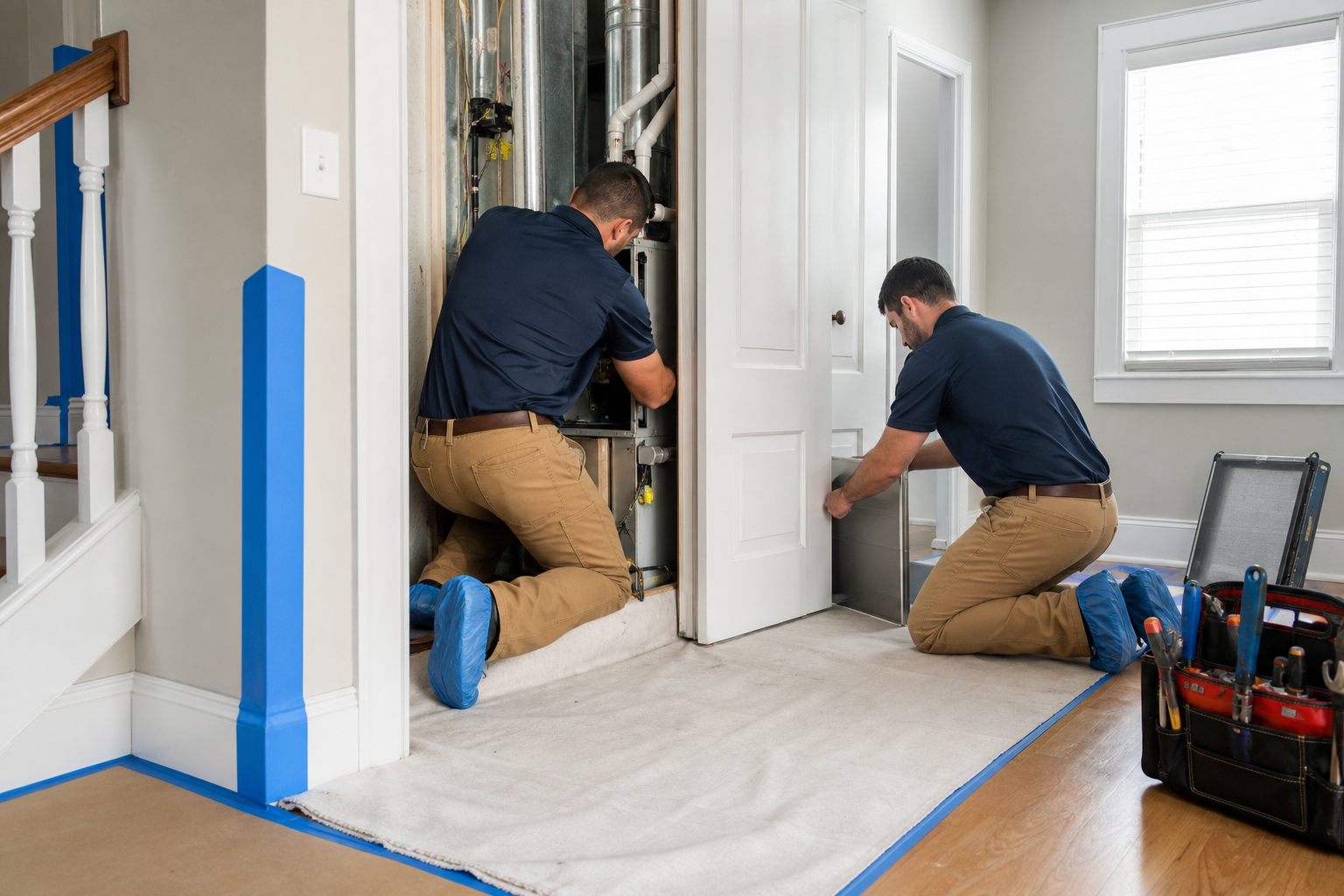
How HVAC Installers Can Improve Jobsite Cleanliness and Home Protection to Win More Referrals
Practical systems for cleaner installs, fewer homeowner complaints, and a stronger final impression that leads to better word of mouth.
Most homeowners cannot judge brazing technique, static pressure, evacuation procedure, or airflow setup the way an experienced installer can.
They can judge whether your crew tracked dirt across the floor, leaned sheet metal against a finished wall, left packaging in the driveway, or turned a utility space into a mess.
That is why jobsite cleanliness and home protection matter so much for HVAC installers.
They are not extras.
They are part of the installation experience, part of risk control, and part of what homeowners talk about after the job is done.
A clean, protected home feels professional.
It lowers customer stress during a disruptive project.
It reduces arguments about scratches, dust, debris, and damaged finishes.
And in many cases, it becomes one of the main reasons a homeowner leaves a positive review or recommends your company to neighbors.
If you want more referrals, better online feedback, and fewer avoidable complaints, improving field cleanliness is one of the simplest operational upgrades you can make.
The key is not telling crews to be more careful.
The key is building a repeatable system that starts before arrival and ends only after the final walkthrough.
Homeowners often remember three things most clearly after an install: whether the system works, whether the crew was respectful, and whether the house was left clean.
Why do homeowners care so much about cleanliness during HVAC work?
From a contractor perspective, a system replacement may be routine.
From a homeowner perspective, it is strangers carrying tools, equipment, and debris through personal living space.
Even if the job is technically excellent, the homeowner may still feel disappointed if the house looks disturbed when the crew leaves.
Cleanliness affects trust because it signals care.
If your team protects floors, contains dust, organizes materials, and cleans up thoroughly, the customer assumes the same level of discipline extends to the installation itself.
If the work area looks careless, many homeowners assume the unseen parts of the job may be careless too.
This is especially important in occupied homes with light carpet, finished basements, narrow hallways, stairs, new paint, recently remodeled spaces, or utility rooms that connect directly to living areas.
It also matters when one spouse or decision maker is home during the work and is paying close attention to how the crew moves through the house.
Small moments shape the final impression.
Shoe covers at the door.
A drop cloth under the furnace area.
A vacuum used before the homeowner has to ask.
Old equipment removed without scraping walls.
Packaging stacked neatly instead of scattered.
These details reduce tension and make the job feel controlled.
Just as importantly, they protect your company from avoidable callback friction.
Not every complaint after an install is about performance.
Some are about drywall dust, black marks on trim, insulation debris in a hallway, or a dirty closet floor where the air handler sits.
Those complaints consume office time, lead to awkward follow-up conversations, and can overshadow otherwise solid work.
Referral growth often comes from removing these easy reasons for dissatisfaction.
What should a standard home protection process include before work starts?
The best time to prevent mess is before the first tool comes inside.
Every install crew should follow a standard arrival and setup routine that protects the home before the physical work begins.
This process should be simple enough to repeat on every job, but detailed enough that important steps do not depend on memory.
Start with the walk-in path.
Identify the main route from the entrance to the equipment location and protect it first.
That may include floor runners, drop cloths, or protective coverings suited for the surfaces in the home.
Use products that stay in place and do not create their own tripping hazard.
For tighter homes, corners and stair edges may need extra attention.
Next, assess the equipment path.
Old furnaces, coils, condensers, and boxed equipment can damage walls, flooring, handrails, and door frames during removal and delivery.
Plan the route and assign who will guide, lift, and spot.
Do not wait until a heavy piece is halfway through a narrow doorway to decide how to protect the trim.
Then stage materials intentionally.
Choose one area outside for removed equipment, scrap, and packaging.
Choose one interior area for tools and small materials.
Crews make fewer messes when everything has a place.
Loose fasteners, tape cores, wire scraps, and cardboard spread quickly when staging is improvised.
Dust control should also be part of setup.
On some jobs, this may be as simple as laying down protective covering and keeping a vacuum nearby.
On others, especially in finished spaces or closet installations, you may need stronger dust containment habits around cutting, drilling, or demolition.
Local requirements vary, and your process should fit the home, the scope of work, and your company standards.
Finally, communicate the plan to the homeowner.
A quick explanation builds confidence.
You do not need a speech.
Just let them know where your crew will enter, what areas will be protected, and how debris removal will be handled.
That tells the homeowner you are thinking beyond the equipment itself.
- Confirm the entry door and primary work path before unloading.
- Install floor protection from the entrance to the work area.
- Use shoe covers or dedicated indoor footwear as appropriate for conditions.
- Protect corners, trim, railings, and tight equipment paths when needed.
- Assign staging areas for tools, new equipment, removed materials, and trash.
- Keep a vacuum and cleanup supplies accessible from the start of the job.
- Explain the plan to the homeowner in plain language before work begins.
How can installers keep the work area cleaner during the job itself?
Many crews begin with good intentions but lose control of cleanliness once the work gets busy.
That usually happens because cleanup is treated as an end-of-job task instead of an all-day discipline.
The cleaner approach is to build housekeeping into the install flow.
First, control debris as it is created.
Do not let wire ends, screws, insulation scraps, zip ties, and cardboard build up around the work area.
Keep a designated trash container and scrap container close enough that using them is faster than dropping materials on the floor.
When debris accumulates, it gets tracked through the home and slows the crew later.
Second, separate clean tools from dirty materials.
Technicians often move between indoor and outdoor tasks during a replacement.
If muddy boots, debris-covered gloves, and dusty tools come back inside repeatedly, the floor protection alone may not be enough.
Set a habit for wiping tools, changing shoe covers when needed, and keeping outdoor materials from migrating into finished spaces.
Third, reduce unnecessary foot traffic.
Every trip through the home is another chance to mark a wall, drop fasteners, or track in dirt.
Better staging, better communication between lead and helper, and a little planning can significantly cut avoidable trips.
Load what you need before entering a finished area.
Bring a small tote for fittings, screws, sealants, and electrical supplies instead of making repeated runs.
Fourth, pay attention to cutting and fabrication habits.
Whenever possible, do messy work in the right place rather than the most convenient place.
If sheet metal trimming or drilling can be done where cleanup is easier and homeowner exposure is lower, that usually leads to a better result.
When interior cutting is unavoidable, contain the mess immediately.
Fifth, keep old equipment and removed parts moving out.
Nothing makes a jobsite feel chaotic faster than removed components sitting in hallways or mixed with new materials.
Once a section is out, move it to the designated disposal area as soon as practical.
That keeps the interior safer and more orderly.
Sixth, assign one person to notice what everyone else stops seeing.
On larger installs, the lead may be focused on refrigerant piping, controls, startup, or problem solving.
A helper or junior tech can be made responsible for maintaining path protection, consolidating trash, and doing periodic cleanup sweeps.
That role should be explicit, not assumed.
Jobsite cleanliness improves when someone owns it in real time.
It also helps to stock trucks for clean work instead of relying on leftovers from previous jobs.
If crews run out of shoe covers, tape, runners, trash bags, microfiber towels, or vacuum filters, standards slip quickly.
Home protection supplies should be treated like core install materials, not optional accessories.
What should happen at the end of the installation before the crew leaves?
The end of the job is when the customer decides how they feel about the entire experience.
You can do excellent mechanical work and still lose the emotional finish if the cleanup is rushed.
A strong closeout process should be just as standardized as startup and commissioning.
Begin with a full debris removal sweep.
Do not just clean the mechanical area.
Check the full route used by the crew, including stairs, hallways, entry points, driveway staging areas, and spots where packaging or old equipment sat temporarily.
Look for metal shavings, bits of insulation, wire clippings, tape backing, screws, and smudges on nearby surfaces.
Vacuuming should be normal, not exceptional.
For many homeowners, seeing the crew vacuum or wipe down surfaces reinforces that the company finishes what it starts.
It is a visible sign of professionalism.
Also inspect the work area from the homeowner’s eye level rather than the installer’s eye level.
Your team may be focused on line hide, drain routing, service clearances, or panel access.
The homeowner may notice fingerprints on a door frame, dust on a shelf, or scraps left behind the water heater.
Pause and scan for those details.
Before leaving, remove all temporary protections carefully.
Make sure no tape residue, shifted floor covering, or trapped debris remains underneath.
If weather conditions caused mud or moisture near the entrance, give that area extra attention.
Then do a final walkthrough with the homeowner.
This should cover system basics, but it should also invite them to look at the work area and traffic path.
Ask if everything looks good before the crew departs.
That creates an opportunity to solve a concern immediately instead of hearing about it later in a review or phone call.
A clean closeout also makes the review ask easier for your company.
Customers are more likely to recommend a contractor when they feel the home was respected throughout the process.
How do you train crews so cleanliness becomes consistent instead of optional?
Most contractors already say cleanliness matters.
The challenge is turning that belief into repeatable field behavior across every lead installer, helper, and service replacement crew.
The first step is defining the standard clearly.
If your expectation is simply be neat, each technician will interpret that differently.
Create a written home protection standard for installation work.
Keep it practical.
List what must happen on every occupied residential job, what supplies must be stocked on every install truck, and what closeout steps are required before departure.
The second step is training by demonstration.
New hires and helpers do not automatically know how your company wants runners laid out, equipment routes planned, or cleanup handled.
Show them.
Ride along, model the process, and explain why each step matters.
Link the behavior directly to homeowner trust, company reputation, and reduced conflict.
The third step is inspection.
Standards that are never checked become suggestions.
Field supervisors, install managers, or owners should review jobs with cleanliness in mind, not just technical quality.
Ask for photos of protected pathways, staged work areas, completed installations, and final cleanup.
Use those photos for coaching rather than only for marketing.
The fourth step is accountability without drama.
If a crew repeatedly leaves preventable messes, misses protection steps, or generates homeowner complaints, address it directly.
Treat home protection as part of job performance.
Because it is.
The fifth step is making the right behavior easy.
Crews are more likely to follow standards when trucks are organized, protection materials are replenished, and the install schedule is realistic enough that they are not sprinting to the next call all day.
If your company says cleanliness matters but gives crews no time, no supplies, and no truck organization to support it, the standard will not hold.
The sixth step is recognition.
When a crew receives praise for respecting a home, share it.
Positive customer comments about cleanliness are valuable because they reinforce the exact behavior you want repeated.
Over time, this changes company culture.
The goal is for homeowners to experience the same level of care regardless of which crew arrives.
How can you turn a cleaner jobsite into more referrals without sounding salesy?
The simplest answer is to let the experience do most of the talking.
You do not need to brag about being clean if the homeowner can see it throughout the day.
Still, there are smart ways to make your process visible and memorable.
Start during the sales and scheduling process.
Without overpromising, let homeowners know your installation team uses floor protection, takes care with traffic paths, and performs a final cleanup walkthrough.
This matters particularly for customers comparing multiple bids that look similar on equipment and scope.
It gives them another reason to trust your company.
During the job, small communication points help.
If the lead installer tells the homeowner, We are going to protect this path before we bring the old unit out, that signals intention and professionalism.
If the team pauses to move furniture carefully or asks permission before using an alternate access point, that earns goodwill.
After the job, your review request can mention the overall installation experience, not just equipment performance.
That gives satisfied customers a natural opening to mention that the crew was respectful, organized, and clean.
You can also use review excerpts internally and externally when customers specifically mention jobsite care.
Statements about protecting floors, cleaning up thoroughly, and leaving the house in great shape often connect strongly with future buyers because they address a common fear.
Referral growth comes from reducing friction and increasing confidence.
When homeowners feel your company treated their home carefully, they are more comfortable recommending you to friends and family.
That recommendation is often more enthusiastic because it includes both technical trust and personal comfort.
In other words, they are not only saying the system works.
They are saying your crew was good to have in the home.
That is a powerful referral advantage.
If you want more five-star feedback, do not focus only on the equipment outcome. Improve the in-home experience the customer sees, hears, and cleans up after.
What supplies should every install truck carry for cleaner residential work?
Many cleanliness problems are really stocking problems.
Crews often skip protective steps because they used the last runner yesterday, the vacuum filter is clogged, or no one replaced the box of shoe covers.
That is a management issue, not just a technician issue.
Build a standard truck list for home protection and inspect it routinely.
- Floor runners or protective pathway coverings sized for common residential routes.
- Clean drop cloths for mechanical spaces, closets, and nearby finished surfaces.
- Shoe covers or a dedicated indoor footwear process for occupied homes.
- Painter-safe tape or other protection-compatible fastening materials when appropriate.
- Corner or edge protection for tight hallways and stairwells.
- Trash bags and scrap containers for immediate debris control.
- Shop vacuum in working order with clean filters and attachments.
- Microfiber towels, surface wipes, and basic touch-up cleaning supplies.
- Small bins or totes for fasteners, wire scraps, fittings, and loose install materials.
- Glove options for switching between dirty removal work and cleaner indoor finish work.
Your exact list may vary by company, truck layout, and the kinds of projects you perform most often.
The point is to stop improvising cleanliness on each job.
Make it a stocked system.
Frequently asked questions about cleaner HVAC installs
Does improving cleanliness slow down the installation day too much?
Usually not when the process is standardized.
Protection and cleanup add some time, but they often save time by reducing clutter, limiting rework, and preventing homeowner concerns that interrupt the job.
Should every residential job get the same level of protection?
Every occupied home should get a baseline standard, but the exact approach can vary by scope, access, weather, and finishes.
A finished basement, narrow staircase, or newly remodeled home may require more protection than an unfinished utility area.
How do you get veteran installers to buy into stricter cleanup standards?
Connect cleanliness to fewer complaints, stronger reviews, and easier referrals rather than presenting it as cosmetic busywork.
Experienced installers usually respond better when they see it as part of craftsmanship and professionalism.
What if a homeowner is especially concerned about dust or damage?
Acknowledge the concern early, explain how your crew will protect the home, and tailor the protection plan to the layout and surfaces involved.
Local requirements vary, and some situations may call for extra containment or additional precautions.
Can cleanliness really influence referrals that much?
Yes, because referrals are emotional as well as technical.
Homeowners are more likely to recommend a company when they felt comfortable with the people in their home and were not left with damage, dust, or disorder to deal with afterward.
Final thoughts
HVAC contractors often look for referral growth in advertising, promotions, and follow-up campaigns.
Those can help.
But one of the strongest referral drivers is still the lived experience of the installation itself.
Jobsite cleanliness and home protection are practical, visible, and memorable.
They influence how homeowners feel while the work is happening and how they describe your company after the work is done.
If your team wants more word-of-mouth business, start by tightening the basics.
Protect the path.
Control debris as you go.
Stage materials with intention.
Stock trucks for clean work.
Train every crew to follow the same process.
Finish with a real cleanup and walkthrough.
When you do that consistently, you reduce preventable complaints, improve customer confidence, and leave behind the kind of impression people actually share with others.
Join the HVAC Installer Network
Create an installer listing to help homeowners discover your business, learn about your services, view your company information, and connect with you about installation opportunities in your service area.
This article is for general informational purposes only and is not a substitute for field judgment, manufacturer instructions, company policy, insurance guidance, or applicable code and safety requirements.
Local requirements vary, so contractors should confirm the right protection, cleanup, disposal, and installation practices for each job and service area.