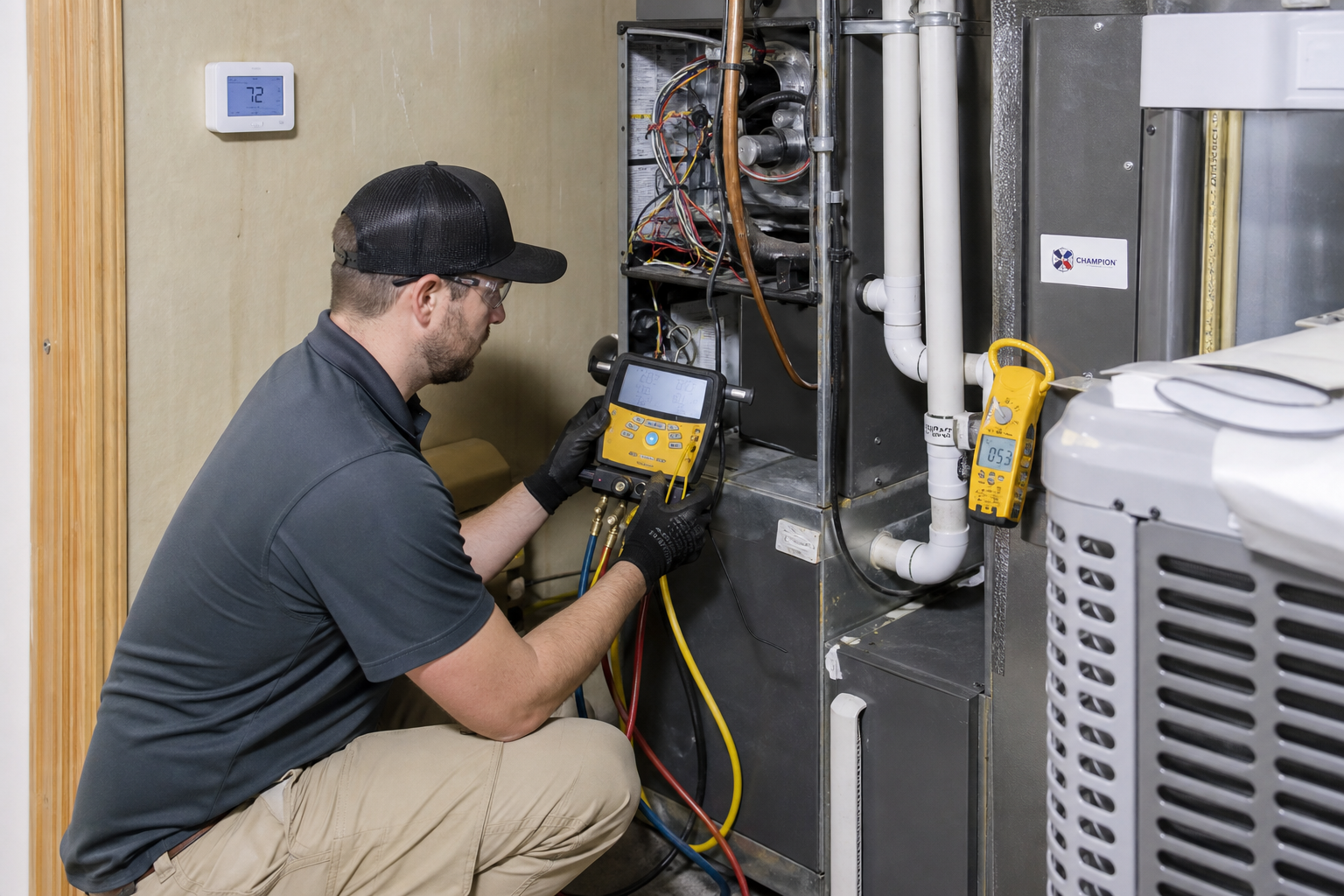
How to Reduce HVAC Callbacks After System Changeouts With Better Startup and Commissioning
A field-tested process for catching preventable issues before your crew leaves the driveway.
For many HVAC contractors, the job is not truly profitable until the first weeks after startup pass without a callback. A system changeout can look clean, test-run fine for a few minutes, and still create return trips for airflow complaints, thermostat confusion, drain leaks, noise, short cycling, comfort imbalance, or poor capacity. In many cases, the root problem is not the equipment. It is a startup and commissioning process that was rushed, inconsistent, or left incomplete at the end of a long install day.
If your goal is to reduce HVAC callbacks after system changeouts, better commissioning is one of the most controllable improvements you can make. It helps your team catch installation defects early, confirm the system is operating within manufacturer targets, and create a clear record of what was checked. It also gives homeowners more confidence in the work and fewer reasons to call the office the next morning.
This guide focuses on practical steps contractors can build into real field operations. It is not about adding paperwork for the sake of paperwork. It is about creating a repeatable finish line for every changeout so the crew does not leave important details to chance. Specific code, permitting, and startup requirements vary by location and equipment, so always follow local requirements and manufacturer instructions for the exact system being installed.
Startup is the last stage of installation, but it is the first stage of system performance. If the system is not verified under a repeatable process, your office may end up discovering the missed step only after the customer does.
Why do so many callbacks happen after system changeouts?
Most post-changeout callbacks are not caused by dramatic equipment failure. They are usually tied to small issues that were never fully checked. A blower speed may be left at a default setting that does not match the duct system. A condensate drain may not be fully tested under flowing water. A thermostat may be technically operational but not configured for the installed equipment. A heat pump may be running, but lockout settings, staging behavior, or auxiliary heat setup may not be confirmed. The homeowner experiences the symptom, not the missing commissioning step.
Crews are especially vulnerable to missed details near the end of a job. The system is physically installed, the house is warming or cooling, the day is running long, and everyone wants to wrap up. That is exactly when a disciplined startup procedure matters most. It moves the closeout process from memory-based to process-based.
Another reason callbacks happen is that installers and service technicians may define a successful startup differently. The installer may think, It runs. The service department may define success as correct airflow, proper charge, proper controls, acceptable static pressure, no drain risk, no unusual noise, and a homeowner who knows how to operate the thermostat. Aligning those definitions can dramatically reduce avoidable return visits.
What pre-start checks should every crew complete before powering up the new system?
Good commissioning starts before the disconnect is turned on. A short pre-start routine can catch obvious oversights that become embarrassing callbacks later. Start with the basics: verify model and match, inspect line set connections, confirm evacuation was completed correctly, confirm service valves are positioned as required, and verify all panels and access doors are properly installed.
At the indoor equipment, confirm the coil orientation, filter location, blower wheel condition, wiring terminations, and drain trap arrangement where required. Make sure the supply plenum, return transition, and any zoning or bypass components are installed as intended. Confirm that safeties are wired in and that float switches, if included, are not just physically present but electrically functional.
At the outdoor unit, verify pad stability, clearances, line set support, wire protection, disconnect condition, and breaker sizing based on manufacturer data. Check that low-voltage wiring is secured and not routed where vibration or sharp edges could create future failures. Small details like a poorly supported whip or rubbing thermostat wire can become nuisance callbacks weeks later.
Before startup, it also helps to do a visual duct review. A changeout often exposes preexisting duct defects or connection points disturbed during installation. Loose return connections, disconnected branch takeoffs, kinked flex, or crushed insulation can undermine the new system before it ever has a chance to perform properly. Even if the duct system was not fully replaced, disturbed sections should be checked and corrected when possible.
Why should airflow verification come before refrigerant fine-tuning?
Because airflow affects almost every other performance reading. If blower settings are wrong, static pressure is excessive, or the duct system is severely restricted, the refrigerant side can appear misleading. Contractors that try to fine-tune charge before confirming airflow often end up chasing numbers that shift once airflow is corrected.
A practical sequence is to verify filter condition, blower speed selection, clean coil surfaces, open dampers where applicable, and then measure static pressure and airflow indicators before making final refrigerant adjustments. You do not need to overcomplicate the process, but you do need to confirm that the indoor side is operating close to intended design conditions.
Static pressure is especially valuable because it can reveal trouble hidden behind a neat-looking installation. A system may start and cool, yet still be operating against excessive restriction. That can create noise complaints, poor comfort in remote rooms, reduced capacity, icing risk, or elevated blower stress. If the crew measures static and finds a problem while still onsite, they can address settings, filter fit, transition restrictions, damper positions, or at minimum document and communicate the issue before it becomes a callback.
For contractors trying to reduce HVAC callbacks after system changeouts, airflow confirmation also creates better internal accountability. It moves discussions away from opinion and toward field data. The office can look at startup records and see whether the system left the job within acceptable operating range or whether there were preexisting distribution limitations that were explained to the customer.
How can crews make refrigerant charging more repeatable and less guess-based?
The best way is to remove shortcuts. That means charging by manufacturer procedure for the specific equipment, using verified airflow conditions, stable operating conditions, and accurate instruments. A fast temperature split check may help confirm the system is doing something, but it is not a substitute for actual charging procedure.
Install teams should know whether the unit calls for superheat, subcooling, weight-in, or a combination of methods depending on the system and conditions. They should also allow enough runtime for readings to stabilize instead of making quick adjustments immediately after startup. On busy install days, impatience leads to overcorrection.
Line set length and lift matter too. A matched system with a well-executed brazing job can still perform poorly if additional charge calculations are skipped where required by the manufacturer. Similarly, if the line set was reused, crews should not assume that a successful pressure test alone means everything is ideal. Oil condition, contamination history, insulation quality, and line routing can all affect the final outcome.
Consistency improves when contractors standardize what gets recorded. If every startup sheet captures outdoor ambient, indoor return conditions, supply conditions, suction and liquid readings, superheat or subcooling, and final charge notes, field leaders can review trends across jobs. The point is not to bury crews in paperwork. The point is to create enough structure that the process can be coached, audited, and improved.
What electrical and control checks are most often missed at startup?
Electrical callbacks after a changeout are often frustrating because they usually stem from something simple. Loose low-voltage connections, incorrect thermostat setup, improper staging logic, missed dip switch settings, breaker or disconnect issues, and unsecured wire routing are common examples. Many of these problems do not show themselves during a five-minute test run.
At startup, verify line voltage, control voltage, equipment grounding, thermostat calls, blower off-delay selections where applicable, and any board settings related to tonnage, airflow profile, staging, or fan behavior. Variable-speed and communicating systems deserve extra attention because a physically correct install can still behave poorly if control configuration is incomplete.
For heat pumps, confirm the thermostat is set up for the actual equipment type and accessory package, not just powered on and calling. Check reversing valve operation, defrost board configuration where relevant, auxiliary heat lockout or staging behavior if used, and outdoor sensor input where part of the design. On straight cool or furnace systems, verify staging and fan operation in all intended modes.
Also test the obvious homeowner-facing control functions. Does the thermostat schedule hold when expected? Does the fan setting work correctly? Are Wi-Fi features or app pairing promised by the sale actually completed, or is the customer going to call the office tonight because they cannot connect? A surprising number of “service calls” after changeouts are really commissioning and setup tasks that were left unfinished.
How important are drain, condensate, and accessory checks before leaving the job?
They are critical, especially because water issues damage trust faster than many comfort issues. A homeowner may tolerate uneven airflow for a day while waiting on an adjustment. Water on the ceiling, floor, or furnace platform creates immediate concern and can turn a good install into a credibility problem.
Every crew should test the condensate path intentionally, not just assume it will drain because the pipe was glued correctly. Verify slope, trap configuration where needed, drain termination, float switch function, and pan condition. Pouring water through the drain system is a simple step that catches hidden issues before the customer does.
Accessories deserve the same mindset. If a system includes a media filter cabinet, humidifier, UV device, zoning panel, condensate pump, surge protection, fresh air component, or other add-on, startup should include confirmation that each accessory is powered, wired, and behaving as intended. Installers often focus on the heating and cooling equipment first and treat accessories as secondary, but many callbacks begin with the part of the system that got less attention.
Noise and vibration should also be part of closeout. A slight cabinet rattle, line set vibration, or supply boot oil-canning sound may seem minor to the crew, but homeowners notice these issues quickly in a quiet house. Walk the system while it operates. Listen at the air handler or furnace, at the outdoor unit, and at a few supply locations. Small adjustments onsite can save a return trip later.
What should be documented to protect the company and improve quality control?
Documentation should serve two purposes: improving technical consistency and reducing confusion later. A startup record should not be treated as paperwork that gets filed and forgotten. It should be a useful snapshot of how the system left the job.
At minimum, document the equipment installed, core operating readings, airflow or static findings, electrical verification, drain test completion, thermostat setup confirmation, and any preexisting limitations that were observed but not corrected as part of the scope. Photos can be especially helpful for line set routing, drain layout, equipment data plates, filter setup, and final finished work.
Why does this matter for callbacks? Because not every post-install complaint is caused by the current job. Some are related to old duct deficiencies, closed interior doors in undercut-limited homes, dirty construction environments, or homeowner operation issues. If your records show what was tested and what was communicated at handoff, your team can respond faster and more professionally when questions come in.
Documentation also gives install managers a coaching tool. If one crew consistently records high static pressure, repeated drain corrections, or thermostat setup omissions, the pattern becomes visible. That allows training to be specific rather than general. Better feedback loops are one of the strongest long-term ways to reduce HVAC callbacks after system changeouts.
How can homeowner handoff reduce callbacks that are not really equipment failures?
A strong handoff prevents many unnecessary calls. Homeowners often call because they do not know what normal looks like on a new system. They may not understand staging behavior, fan timing, filter location, thermostat scheduling, maintenance reminders, or what to expect during weather extremes. If no one explains these items clearly, the office becomes the default help desk.
The handoff does not need to be long. It does need to be intentional. Show the homeowner how to change the temperature, switch modes, replace or inspect the filter, and identify the drain or float safety if appropriate. Explain any accessory they purchased. If the system is variable-capacity or multi-stage, let them know that longer runtimes can be normal. If there are preexisting comfort limitations in parts of the house due to duct design, explain those in plain language before dissatisfaction turns into a callback.
It also helps to set expectations for the first few days. Let the homeowner know when to call, what conditions may be normal after installation, and how to use the thermostat without accidentally overriding schedules or modes. A quick orientation, backed by concise written notes, can prevent many after-hours questions.
From the contractor side, the handoff is also your final confidence check. If the installer cannot easily explain how the system works, that may be a sign the setup itself was not fully verified.
What does a practical callback-reduction checklist look like for real crews?
The best checklist is short enough to be used every time and detailed enough to matter. It should fit the way your company actually installs systems. A process that looks perfect in the office but slows the crew unnecessarily will eventually be skipped. Start with the recurring issues your company sees most often, then build the checklist around preventing those exact callbacks.
- Confirm equipment match, model numbers, and required manufacturer startup procedure.
- Verify evacuation, valve position, panel installation, and refrigerant circuit readiness.
- Inspect wiring terminations, grounding, disconnect, breaker alignment, and wire protection.
- Set and verify blower speed or airflow profile before final charging adjustments.
- Measure and record static pressure or other airflow indicators.
- Charge the system using manufacturer procedure under stable conditions.
- Verify thermostat setup, staging, fan operation, and accessory configuration.
- Test condensate drainage, float safeties, pumps, and trap performance where applicable.
- Check for abnormal noise, vibration, and obvious comfort distribution issues.
- Document readings, photos, and any preexisting limitations outside the contracted scope.
- Complete homeowner orientation, filter discussion, and basic operating instructions.
- Have a lead installer or field supervisor review closeout on higher-complexity jobs.
Some contractors improve consistency further by separating installation completion from commissioning signoff. In that structure, the crew installs the system, but a lead tech, startup specialist, or supervisor performs the final verification on selected jobs. That approach is not required for every company, but on higher-ticket or more complex projects, a second set of eyes can catch issues that the primary crew misses after a long day.
How can office and field teams work together to keep callback reduction from fading over time?
Callback reduction is not just an install issue. It is an operations issue. If the office tracks callbacks by category, install managers can identify which problems are procedural and which are training-related. If service technicians give useful job-close feedback instead of just fixing the issue and moving on, the install department can improve faster.
A helpful review rhythm is to look at recent changeout callbacks and ask a few direct questions. Was this a startup miss, a workmanship issue, a sales expectation issue, a preexisting house-system limitation, or a true equipment problem? Could a checklist item have prevented it? Was the customer told what to expect? Was the issue documented at turnover? Over time, these reviews create a clearer picture of where your process is leaking margin.
It is also smart to define what counts as a callback. If one company logs only no-cooling failures while another also logs thermostat confusion, noise complaints, and drain adjustments, they will see very different pictures of field quality. Use a definition broad enough to capture the preventable customer experiences that consume your team’s time.
The companies that sustain improvement usually do one thing well: they turn repeat problems into permanent process changes. When a drain issue repeats, they adjust the drain test step. When thermostat confusion repeats, they update handoff procedure. When airflow complaints repeat, they require static documentation. That is how startup and commissioning become profit-protection tools instead of end-of-day tasks.
Frequently Asked Questions
Is commissioning the same as startup?
They overlap, but many contractors use startup to mean getting the equipment running and commissioning to mean verifying that it operates correctly within intended conditions. In practice, reducing callbacks usually requires both.
Do small residential changeouts really need formal commissioning?
Yes, even if the process is simplified. Smaller jobs still generate callbacks from airflow, controls, drains, noise, and homeowner confusion. A practical commissioning routine protects margin on jobs of every size.
What is the fastest way to improve install quality without slowing crews too much?
Start with a short required checklist tied to your most common callbacks, train crews on the sequence, and require basic readings and photos at closeout. Keep the process realistic so it gets used consistently.
Should installers or service technicians handle final commissioning?
That depends on company structure, job complexity, and team skill sets. Many contractors have installers do the standard commissioning and reserve supervisor or senior-tech verification for more complex systems. Local requirements vary, so follow manufacturer instructions and applicable rules in your area.
How do we handle preexisting duct issues discovered during startup?
Document them clearly, explain their likely impact on performance, and communicate what is and is not included in the original scope. If possible, offer corrective options before the customer experiences the issue as a disappointment.
Final Thoughts
If you want to reduce HVAC callbacks after system changeouts, do not treat startup as the part of the job that happens after the real work is done. Startup and commissioning are the final quality-control steps that determine whether the installation stays profitable. The system should leave the job not just running, but verified.
That means confirming airflow before chasing charge, checking controls instead of assuming defaults are correct, testing drains instead of trusting appearance, documenting actual readings, and giving the homeowner a clear handoff. None of those steps are glamorous, but they are often the difference between a clean closeout and a preventable return trip.
The strongest process is the one your crews will actually follow every time. Build it around your most common callback causes, coach it consistently, and refine it as patterns emerge. Over time, better commissioning does more than reduce service noise. It protects reputation, improves install quality, and gives your company a more reliable finish on every system changeout.
Join the HVAC Installer Network
Create an installer listing to help homeowners discover your business, learn about your services, view your company information, and connect with you about installation opportunities in your service area.
This article is for general informational purposes and is not a substitute for manufacturer instructions, jobsite judgment, or code compliance review. Equipment requirements, commissioning procedures, permit rules, and installation standards vary by system and by location. Always follow applicable manufacturer documentation and local requirements.