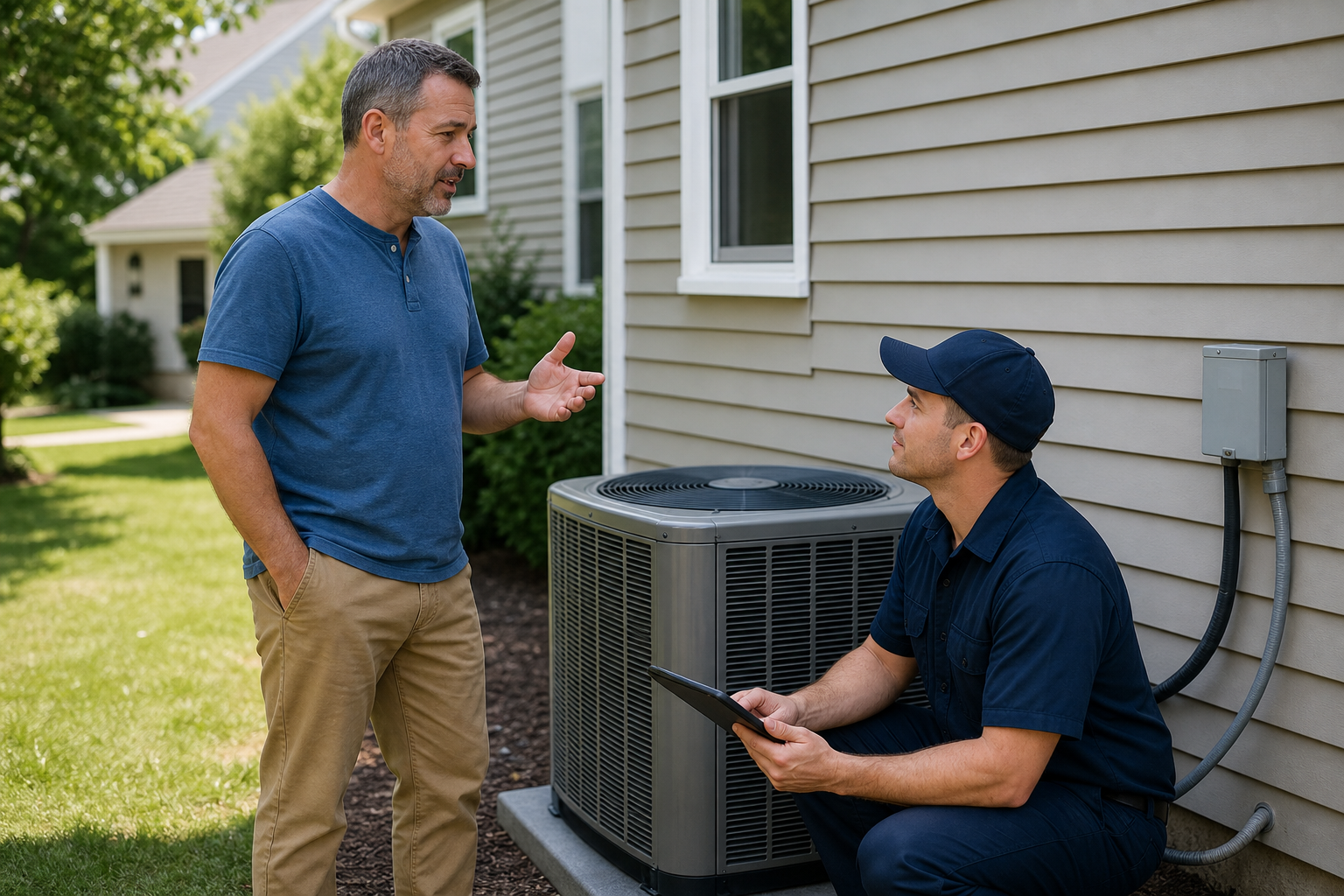
Repair or Replace Air Conditioner? A Homeowner’s Guide to Making the Right Call
If your AC is struggling, making noise, or needing repeated service, here is a practical way to weigh one more repair against a full replacement.
Few home decisions feel quite as annoying as spending money on an air conditioner that still does not seem reliable. One day the house is warm and stuffy, the next day a technician is replacing a part, and a month later something else goes wrong. At that point, most homeowners ask the same question: should I repair this system again, or is it finally time to replace it?
The right answer depends on more than the immediate repair bill. Age, efficiency, comfort, refrigerant type, noise, repair history, and your long-term plans for the home all matter. A minor repair on a newer system can make perfect sense. A major repair on an older unit that still leaves you with uneven cooling may not.
This guide explains how to think through the decision without getting lost in technical jargon. It is not about pushing replacement in every situation. It is about helping you understand when a repair is reasonable, when replacement starts to look smarter, and what to discuss with a local HVAC professional before you commit. Since equipment rules, code requirements, and product availability can vary by location, always confirm local requirements with a qualified installer.
If your air conditioner is older, needs a major component, and still has comfort problems after past repairs, replacement is often worth serious consideration. If it is relatively new and the issue is isolated, repair is often the better path.
How old is your air conditioner, really?
Age is one of the first things to consider because it changes the value of every repair. An air conditioner that is only a few years old may have many useful seasons left. In that case, replacing a contactor, capacitor, fan motor, or other repair item can be a practical investment. You are restoring a system that is still early or mid-life.
With an older unit, the math starts to change. Even if you fix the current problem, you are still relying on aging components that have been through years of summer heat, vibration, and wear. That does not mean every old system must be replaced immediately, but it does mean a large repair deserves more scrutiny.
Homeowners sometimes do not know the actual age of the equipment, especially if they bought the house after installation. A local technician can often identify the manufacture date from the model and serial information. If the indoor and outdoor equipment were installed at different times, ask about both. The age of the full cooling setup matters, not just the outdoor condensing unit.
It also helps to think about your timeline in the home. If you expect to move soon and the system only needs a modest repair, you may decide to keep it going. If this is your long-term home, you may care more about future reliability, lower noise, and better comfort from a newer system.
- Find out the age of both the outdoor unit and indoor coil or air handler.
- Ask whether the current repair is typical for the system’s age or a sign of broader wear.
- Consider how long you plan to stay in the home.
- Think beyond today’s cost and include likely repairs over the next few cooling seasons.
What kind of repair does the system need?
Not all repairs carry the same weight. A relatively small electrical or maintenance-related repair is very different from replacing a compressor, addressing a refrigerant leak in a hard-to-access coil, or solving a failure that points to larger system stress. The more expensive and invasive the repair, the more closely you should compare that cost to the value of a replacement.
It is also important to ask whether the failed part is likely an isolated issue or whether other components may be affected. For example, if one major part failed because the system has been running under strain, replacing that part may not solve the underlying cause. A good technician should be able to explain what failed, why it failed, and whether they see signs of additional wear.
Another factor is whether the repair restores the system to dependable operation or merely buys a little time. Sometimes that little time is exactly what a homeowner needs, especially if the replacement decision must wait for budgeting or scheduling reasons. A short-term repair can still be a smart choice if you understand that it is temporary.
Ask for plain language. You do not need a deep mechanical explanation to make a solid decision. What you do need is an honest description of the problem, what happens if you repair it, and what risks remain if you choose not to replace the system yet.
A useful question is: “If I repair this today, what are the next one or two parts you would worry about on this system?” The answer often reveals whether you are dealing with a one-off issue or a unit nearing the end of its practical life.
How often has the unit needed service?
One repair does not automatically mean the system is failing. Repeated breakdowns do. If you have called for service multiple times over the last few summers, the pattern matters. Frequent repairs create direct costs, but they also create inconvenience, uncertainty, and the risk of losing cooling during the hottest weather.
Think about your recent history honestly. Has the unit needed the same fix more than once? Have different components failed within a short period? Are you dealing with a new problem every season? If so, you may be spending money to keep an unreliable system barely operational rather than truly solving the issue.
Service frequency also affects your confidence in the home. Many homeowners reach a point where the biggest issue is not the latest invoice. It is the feeling that the AC might quit any time guests are visiting, when temperatures spike, or right before a weekend. That stress has value too, even though it does not appear on a repair estimate.
If you have records, gather them before talking to an installer. A repair timeline helps clarify whether replacement is becoming the more economical choice. If you do not have records, make a simple list of the problems you remember and when they happened.
- List every AC repair or service visit from the last two to three cooling seasons.
- Note whether the same problem returned more than once.
- Track nuisance issues such as tripped breakers, weak airflow, and intermittent cooling.
- Include the hassle factor, not just the invoice total.
Is the AC cooling your home the way it should?
Repair decisions should not focus only on whether the equipment turns on. The bigger question is whether the system is doing its job well. If your home has hot rooms, sticky indoor air, long run times, weak airflow, or poor temperature control, simply replacing one failed part may not deliver the comfort you want.
Some comfort problems come from the equipment itself. Others come from duct issues, thermostat problems, insulation gaps, return air limitations, or a system that was not matched well to the home in the first place. That is why it helps to talk about comfort symptoms, not just the broken component. If your AC has struggled for years, replacement might still need to be paired with other improvements for the result to feel worthwhile.
Homeowners often say, “It still works, but it never cools evenly,” or “The upstairs is always hotter,” or “The house feels damp even when the thermostat says the right temperature.” Those are important clues. A repair that gets the unit running again may not fix the underlying comfort issue.
Before deciding, ask the contractor whether the current system’s problem is strictly a repair issue or part of a bigger performance issue. If they recommend replacement, they should also explain whether other items like airflow, duct condition, or thermostat setup deserve attention. A new unit alone is not a magic fix for every comfort complaint.
Are rising energy bills part of the problem?
Older or struggling air conditioners often run longer to produce less comfort. That can show up as higher electric bills, especially during heavy summer use. While many factors affect utility costs, poor AC efficiency can absolutely be part of the story.
If your system seems to run almost constantly, takes a long time to recover after the thermostat is raised, or no longer keeps up on hotter afternoons, it may be using energy less effectively than it once did. Dirty coils, airflow restrictions, refrigerant issues, and plain age can all contribute.
This does not mean replacement automatically saves money in a dramatic way. Avoid anyone promising exact savings without seeing the home and system details. Real-world results depend on climate, thermostat habits, duct condition, insulation, installation quality, and the equipment selected. Still, if your current unit is inefficient and unreliable, lower operating cost can be one meaningful advantage of replacement.
A sensible approach is to ask for a practical comparison, not a sales pitch. Ask how your current system’s condition may be affecting run time and efficiency. Ask whether a repair is likely to restore normal operation or whether the system will probably continue to struggle even after the fix.
Energy use should be considered alongside comfort and reliability. A system that is expensive to run and still leaves the house uneven or humid is giving you two reasons to think about replacement, not just one.
Does refrigerant type change the decision?
Yes, it can. If your air conditioner uses an older refrigerant, repairs involving leaks or major sealed-system work may become more complicated and costly. Availability, pricing, and service options can vary by market and over time, so it is smart to ask your local contractor what that means where you live.
This does not mean every older refrigerant system must be replaced immediately. If the unit is otherwise in decent shape and the repair is minor, you may still choose to fix it. But if the system is older and the repair involves refrigerant loss, coil problems, or compressor issues, the refrigerant type becomes much more relevant to the conversation.
Homeowners should also understand that adding refrigerant without identifying the cause of a leak is usually not a true long-term solution. If refrigerant is low, ask why. A quality diagnosis should explain whether there is a confirmed leak, where it appears to be, and what repair paths exist.
Because refrigerant regulations and product availability can vary, this is one area where local guidance really matters. Ask the contractor to explain your options in practical terms: repair the leak, replace a major component, continue operating with caution if appropriate, or replace the system.
What should you ask before choosing replacement?
If you are leaning toward replacement, slow down long enough to make sure the new system is selected and installed thoughtfully. Replacement is not only about buying new equipment. It is about making sure the home, airflow, and comfort goals are part of the plan.
Start by asking what size and type of system is appropriate for your home and why. Bigger is not always better in air conditioning. A system that is too large may cool quickly without managing humidity well, while a system that is too small may run too long and struggle in peak conditions. Local professionals may use different methods to evaluate the home, and local requirements vary, so ask how they arrived at their recommendation.
You should also ask whether the replacement quote includes related items that matter to performance, such as the indoor coil, thermostat compatibility, drain components, electrical needs, and any duct modifications that may be recommended. If comfort has been a problem, ask directly how the proposed system addresses it.
Noise is another quality-of-life issue worth discussing. If your current outdoor unit is loud enough to be distracting on the patio or near a bedroom, tell the installer. Newer equipment options may offer quieter operation, but the actual result depends on model choice and installation details.
Finally, ask about the installation process and what local permitting or inspection steps may apply. Requirements vary by area. A reputable contractor should be comfortable discussing timing, access needs, startup procedures, and any homeowner preparation involved.
- Ask why the proposed equipment size and type fit your home.
- Confirm whether indoor and outdoor components are being matched appropriately.
- Discuss ductwork, airflow, humidity, and uneven temperature concerns.
- Ask what is included in the quote and what would cost extra.
- Verify what local permit or inspection requirements may apply.
- Make sure you understand the expected installation timeline.
Frequently asked questions
Should I replace my AC before it completely fails?
In many cases, yes. Waiting for total failure can leave you making a rushed decision during hot weather when you need cooling immediately. If your system is aging, unreliable, and facing a major repair, planning replacement before an emergency can give you more time to compare options.
Is it worth repairing an older air conditioner?
Sometimes. If the repair is modest and the system has otherwise been dependable, repairing an older unit may still make sense. If the unit is older, inefficient, and has a pattern of breakdowns, replacement often becomes the better long-term choice.
How do I know if my AC problem is minor or major?
The easiest way is to ask the technician to classify the issue clearly. Find out whether the problem involves a routine electrical part, airflow or maintenance issue, refrigerant leak, coil problem, or compressor-related failure. The more expensive and invasive the repair, the more seriously you should evaluate replacement.
Can a new air conditioner fix hot and cold spots in my house?
It can help if the old equipment was part of the problem, but not every uneven temperature issue is solved by new equipment alone. Duct design, airflow balance, insulation, window exposure, and thermostat location may also affect comfort. Ask your installer what else may need attention.
Should I get more than one replacement quote?
Many homeowners do. Comparing more than one quote can help you understand equipment options, scope differences, and how thoroughly each contractor evaluates your home. Just be sure you are comparing similar work, not only the bottom-line price.
Final thoughts
Choosing whether to repair or replace an air conditioner is rarely about one number alone. It is about balancing age, repair cost, reliability, comfort, efficiency, and how much confidence you have in the system going forward. A newer unit with a manageable repair often deserves that repair. An older unit with repeated issues, comfort complaints, or major component problems may be telling you it is time to move on.
The best decision is an informed one. Ask direct questions, request plain-language explanations, and make sure any recommendation accounts for how your home actually feels, not just whether the equipment powers on. A good HVAC professional should help you understand the tradeoffs without pressure.
If you are unsure, start with a diagnostic visit and ask the contractor to explain both paths: what a repair would realistically accomplish and what replacement would improve. That conversation alone can bring a lot of clarity.
Find an HVAC Installer Near You
Search the HVAC Installer Network to find local professionals, review installer profiles, and connect with contractors serving your area.
This article is for general homeowner education and is not a substitute for on-site diagnosis or installation guidance. Equipment condition, refrigerant options, code obligations, permit needs, and replacement recommendations vary by home and by location. Always confirm local requirements and product details with a qualified HVAC professional.