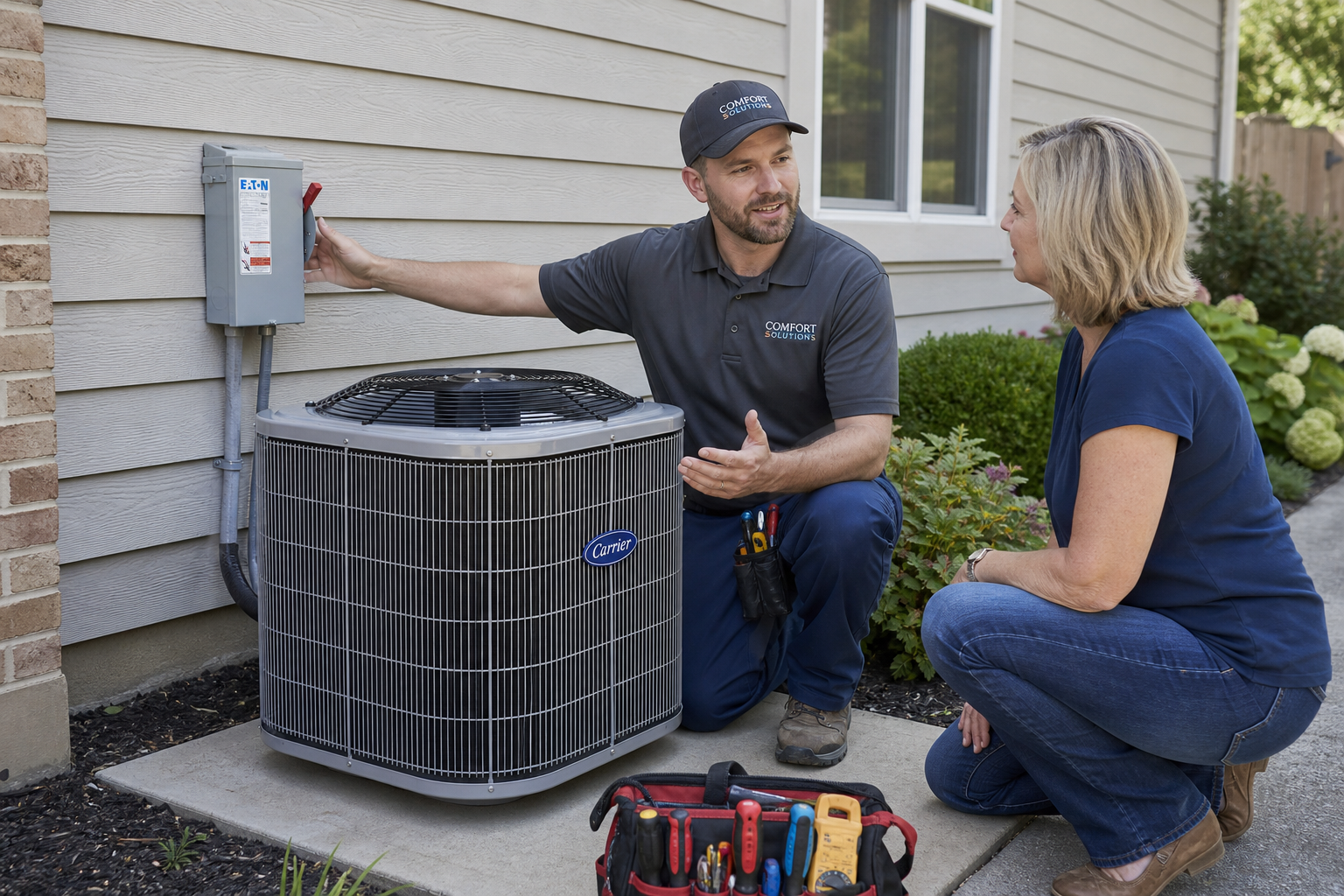
Should You Replace Your HVAC Breaker or Disconnect During a System Changeout?
A practical homeowner’s guide to safety, code issues, compatibility, and when this added replacement cost is actually worth it.
When you replace an air conditioner, heat pump, or condensing unit, most homeowners focus on the big-ticket equipment. That makes sense. The outdoor unit, indoor coil, furnace, or air handler usually gets most of the attention because those are the components doing the heating and cooling. But during a changeout, your contractor may also recommend replacing an electrical breaker, the outdoor disconnect, or both.
That recommendation can feel like an upsell if you were not expecting it. In some homes, reusing the existing electrical components is perfectly reasonable. In others, replacement is the safer and more practical decision. The right answer depends on the age and condition of the existing parts, the electrical needs of the new equipment, visible wear or damage, and local code or inspection expectations. Local requirements vary, so the final decision should be based on your specific installation rather than a one-size-fits-all rule.
This guide explains what the breaker and disconnect do, why they matter during a system changeout, when replacement makes sense, and what questions to ask before approving the work. The goal is simple: help you understand whether replacing these parts is necessary, optional, or a smart preventive step.
If your installer recommends replacing a breaker or disconnect, ask them to show you the existing component, explain why reuse is or is not appropriate, and confirm whether the recommendation is based on damage, sizing, manufacturer requirements, or local inspection standards.
What do the breaker and disconnect actually do?
The breaker and the disconnect are both electrical safety components, but they serve different purposes.
The HVAC breaker is typically located in your main electrical panel or a subpanel. Its job is to protect the circuit by shutting power off if the circuit draws too much current or if a fault occurs. In simple terms, it helps prevent overheating and electrical damage. The breaker must be properly matched to the wiring and suitable for the equipment it serves.
The outdoor disconnect is usually mounted on the wall near the condenser or heat pump. It gives technicians a local way to shut off power at the equipment before service or replacement work. That is important because a technician should not have to rely only on the breaker inside the house to know power is safely off at the outdoor unit.
Some disconnects use a pull-out block. Others use a switch. Some contain fuses, while others are non-fused and rely on the breaker for overcurrent protection. Which type is appropriate depends on the equipment, the electrical design, and local requirements.
These parts are not glamorous, but they matter. A worn disconnect, corroded lugs, poor wire connections, or an incorrectly sized breaker can create nuisance trips, service headaches, safety concerns, or inspection problems.
Why does a system changeout raise this issue?
A new HVAC system is not always an exact electrical match for the old one. Even if the equipment appears similar in size, the manufacturer’s electrical specifications can differ. Minimum circuit ampacity and maximum overcurrent protection values may change from one model to another. That means the old breaker or disconnect may need to be reviewed rather than automatically reused.
A changeout is also one of the best times to address aging electrical components. Once the installer is already replacing the outdoor unit and evaluating the line set, pad, and controls, they have a natural opportunity to inspect the electrical feed and service disconnect too. If a component is rusty, undersized, damaged, or simply in poor condition, changing it now is usually easier than dealing with a separate electrical repair later.
Another factor is liability and workmanship. A contractor installing a brand-new outdoor unit may not want to reconnect it to electrical parts that are obviously deteriorated or questionable. Even if that old disconnect technically still works, it can reflect poorly on the overall installation and increase the chance of a future callback.
When is it usually fine to reuse existing electrical components?
In many homes, reusing the existing breaker or disconnect is completely reasonable. A good contractor should not replace parts just because they are present. They should evaluate whether those parts are still appropriate for the new equipment and in good condition.
Reuse is often acceptable when the existing breaker is correctly sized for the new unit, the wiring is in good condition, the panel connection is sound, and there are no signs of overheating, looseness, corrosion, or repeated tripping. The same basic idea applies to the disconnect. If it is the correct type, weather-appropriate, structurally sound, and free of visible damage, it may not need replacement.
For example, if your old and new condensers have similar electrical requirements and the disconnect is relatively recent, mounted securely, and closes properly, reuse may be the practical choice. Likewise, a panel breaker that matches the equipment requirements and has no signs of age-related problems may continue serving the new system just fine.
This is one reason homeowners should be cautious about blanket statements like “you always replace the disconnect” or “you never need to change the breaker.” Neither is universally true. The condition and suitability of the existing installation matter more than a fixed rule.
- A breaker may be reusable if it is the correct size and type for the new equipment.
- A disconnect may be reusable if it is in good physical condition and appropriate for the application.
- Existing wiring may be reusable if it is properly sized, terminated, and not damaged.
- Reuse is more likely when the old installation was done cleanly and has been protected from weather and corrosion.
When should you seriously consider replacement?
There are several situations where replacing the breaker or disconnect is not just a nice upgrade but a sensible step.
First, replacement is worth strong consideration if the new equipment has different electrical requirements. HVAC nameplates list important information such as minimum circuit ampacity and maximum overcurrent protection. If the old breaker does not fit within those requirements, it should not simply be reused because it was there before.
Second, visible damage matters. If the disconnect box is rusted, cracked, loose on the wall, difficult to operate, missing parts, or showing signs of heat damage, replacing it is usually the better decision. Outdoor disconnects live hard lives. They sit in sun, rain, and seasonal temperature swings. Corrosion and wear are common over time.
Third, repeated electrical issues are a warning sign. A breaker that has tripped often, feels loose, or has signs of overheating deserves closer review. Breakers are not just switches. They are protective devices, and a history of nuisance trips or visible wear may mean replacement is prudent.
Fourth, replacement may be smart if the existing installation looks improvised or outdated. Sloppy whip connections, brittle insulation, a poorly sealed disconnect enclosure, or mismatched parts can all be clues that the electrical side of the old system was never ideal. A changeout is often the cleanest moment to correct that.
Fifth, if your contractor or inspector identifies a compatibility or safety concern, do not dismiss it as a minor add-on without understanding the reason. Sometimes a new heat pump or air conditioner can be installed physically on the old circuit, but the supporting electrical components still need updating to meet the equipment listing or current installation expectations.
Finally, if the disconnect is fused and the installer determines that a different arrangement is more appropriate for the new equipment, replacement may simplify future service and reduce confusion. The right setup depends on the equipment and local standards.
How do code and inspection issues affect the decision?
Code questions are one of the biggest reasons this topic gets confusing for homeowners. You may hear that an old disconnect is “grandfathered,” or that a new system means everything nearby must be brought up to current code. In real life, the answer is often more nuanced, and local requirements vary.
Some jurisdictions focus mainly on whether the new equipment is safely installed and whether any altered electrical work meets current standards. Others may expect the disconnect, whip, or breaker arrangement to align with current local interpretations when equipment is replaced. Permitting and inspection practices can differ from one city or county to another, and even from one inspector to another.
That is why homeowners should avoid assuming that what was acceptable on the old unit will automatically pass with the new one. It may. It may not. A contractor familiar with your area should be able to explain whether replacement is recommended because of visible condition, required by the equipment, or likely needed for permit and inspection approval.
It is also important to understand that code compliance is not the only issue. A component can be old, marginal, or inconvenient even if no one has formally failed it. Replacing a weathered disconnect during a changeout can still be a good choice even when not strictly mandated. On the other hand, some contractors present every electrical update as if it is always legally required, which is not necessarily true. Ask for a clear explanation.
Ask your installer to separate three ideas: what is required for the new equipment, what is required by local code or inspection in your area, and what they recommend as a best-practice upgrade.
Is replacing them worth the added cost?
For many homeowners, this is the real question. Even if replacement is not absolutely required, is it worth paying extra for?
Often, yes. If the disconnect or breaker is old enough that failure is a realistic possibility in the next few years, replacing it during a system changeout can be a practical preventive step. Labor is usually more efficient when the installer is already on site, the equipment is already disconnected, and the job is already underway. That can make replacement during the project more convenient than waiting for a separate service call later.
The value is not just in preventing failure. Newer, cleanly installed electrical components can make future service safer and easier. A solid disconnect mounted properly at the unit gives technicians a reliable shutoff. Correctly sized and properly connected overcurrent protection helps the system operate as intended. These details support the overall quality of the installation.
That said, not every suggested electrical replacement is automatically worth it. If the existing breaker and disconnect are in good condition, properly sized, and likely to pass inspection without issue, you may decide the extra cost does not buy you enough benefit. The best contractors can explain both the necessity and the value, not just hand you a change order.
Think of it this way: replacing a clearly weathered or questionable disconnect during a major HVAC project is often money well spent. Replacing a perfectly good component with no clear reason may not be.
What should you ask your HVAC installer?
If your proposal includes a breaker or disconnect replacement, or if you are told one may be needed after inspection, ask direct questions. Good contractors should be comfortable answering them plainly.
- Is the current breaker or disconnect unsafe, damaged, or simply old?
- Does the new equipment require a different breaker size or disconnect type?
- Are you recommending replacement because of local inspection expectations?
- Can you show me the existing condition and explain the problem in simple terms?
- If we reuse it, what specific risk or downside do you see?
- If we replace it, what exactly is included in the price?
- Will any wiring, whip, fittings, or panel work also need to be changed?
- Is this recommendation a requirement, a best practice, or an optional preventive upgrade?
These questions matter because they help separate legitimate scope from vague add-ons. A contractor who can point to rust, a broken enclosure, overheating marks, incorrect sizing, or manufacturer electrical requirements is giving you something concrete. A contractor who cannot explain the reason clearly may not have a strong case.
If you are comparing bids, watch for this issue closely. One proposal may include electrical updates and another may not. That does not automatically mean one contractor is honest and the other is not. It may simply mean they made different assumptions. Ask both sides to clarify what they inspected, what they are including, and whether local requirements vary.
What are the biggest homeowner mistakes on this issue?
One common mistake is assuming the breaker and disconnect do not matter because the old system ran for years. Old equipment can limp along with marginal components that are not ideal for a new installation. A changeout is exactly when these hidden weak points tend to come up.
Another mistake is approving replacement automatically without asking why. While electrical updates are often justified, homeowners still deserve a clear explanation. You should know whether the replacement is required by the equipment, needed because of visible condition, or suggested mainly as preventive maintenance.
A third mistake is focusing only on the lowest bid. If one estimate excludes needed electrical work, it may look cheaper upfront while creating a permit issue, safety concern, or change order later. The better comparison is total scope, not just total price.
The last mistake is treating all electricians and HVAC installers as interchangeable on this question. In many cases, HVAC companies routinely handle disconnect replacement as part of system installation. In others, panel work or certain electrical modifications may require separate coordination. Local requirements vary, so ask who will perform the work and whether any outside trade is needed.
Final Thoughts
So, should you replace your HVAC breaker or disconnect during a system changeout? Sometimes yes, sometimes no. The smart answer depends on equipment requirements, existing condition, installation quality, and local code or inspection expectations.
If the existing parts are properly sized, in good shape, and appropriate for the new system, reuse may be perfectly fine. If they are weathered, damaged, questionable, or mismatched to the new equipment, replacement is often a worthwhile investment in safety, reliability, and cleaner workmanship.
The key is not to treat this as an automatic upsell or an automatic refusal. Ask your installer to explain the reason, show you the condition of the existing parts, and tell you whether the recommendation is required, recommended, or optional. That gives you the information you need to make a confident decision.
Frequently Asked Questions
Do I always need a new disconnect when I replace my AC or heat pump?
No. If the existing disconnect is in good condition, appropriate for the new equipment, and acceptable under local requirements, it may be reused. The installer should inspect it rather than assume replacement is always necessary.
Can an old breaker damage a new HVAC system?
An incorrect, worn, or problematic breaker can contribute to nuisance trips, poor protection, or electrical issues. It is not something to ignore just because it is out of sight in the panel.
What is the difference between a breaker and a disconnect?
The breaker protects the circuit from overcurrent and faults, while the disconnect provides a nearby shutoff at the equipment for safe service access. Both are important, but they do different jobs.
If my old system worked fine, why would the new one need different electrical parts?
New equipment can have different electrical specifications even if it looks similar in size. Manufacturers may require different overcurrent protection limits or minimum circuit ampacity values than your old unit used.
Is disconnect replacement usually an HVAC job or an electrician’s job?
Often, HVAC installers handle disconnect replacement as part of the system installation. Some panel-related work or specific electrical modifications may require additional coordination. Local requirements vary.
Find an HVAC Installer Near You
Search the HVAC Installer Network to find local professionals, review installer profiles, and connect with contractors serving your area.
This article is for general educational purposes only and is not a substitute for on-site advice from a qualified HVAC installer or licensed electrical professional. Equipment specifications, inspection practices, and local code requirements vary by location. Always have your specific system and electrical components evaluated before approving reuse or replacement.